


It was announced this week that the post-Modern Café will close to give the owner and staff a break. Restaurant staff have been working nonstop the last six months to provide meals to anyone who entered. Prices were removed from the menu. Donations were optional.
The model stopped working as donations slowed. The owner and staff are taking a fresh look at their payment model during the hiatus. Their experiment was unique and remarkable in many ways. They served thousands of meals to hungry people.
While many people have focused on this change as an example of the limits of socialism, we want to add that it is part of an emerging trend, one where people are reasserting the need for public order in their communities. When the café began to attract people who failed to respect the surrounding community, support for the project floundered. Neighbors spoke of open drug use on corners, overdoses, used syringes, human feces, thefts, and fights. The experiment in donation-based payments resulted in neighbors feeling unsafe and general chaos.
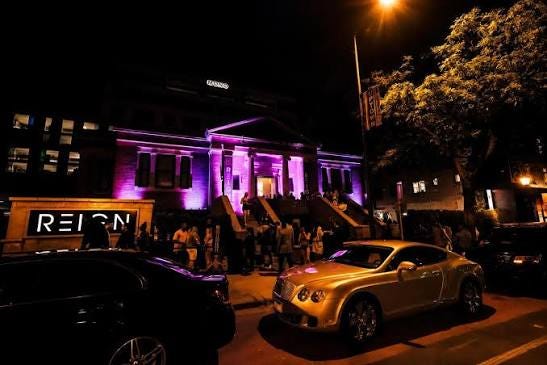
Sunday, shortly before 12:30 a.m., nine people were shot outside the Reign nightclub in Uptown. Public outcry and frustration boiled over. The Uptown community is working hard to build on its revitalization. A mass shooting at one of its busiest intersections is the last thing they needed. That same night five people were shot on the 1800 block of Nicollet Avenue South, an area the city seems to have given up on and now allows drug dealers to operate there with impunity.
In St. Paul, the Pig’s Eye Park encampment is set to be removed August 5. It has over 100 people living in tents. Mayor Her is hopeful that the advance warning will allow people staying in the encampment sufficient time to seek out services and leave before city workers show up.
A common thread runs through all of these events: people favor a compassionate response when people are in need, but there are limits to how much public disorder they are willing to accept.
West Coast Observations
These local flashpoints are part of a pattern we saw echoed on our recent trip west. David Therkelsen and Terry White have returned from their fact-finding mission to the West Coast. We’ll be writing about our findings in the coming weeks. Those stories will be published on the Minneapolistimes.com website. We were able to record a podcast with several Seattle journalists. You can listen to that conversation here.
The reasons why each of these cities has struggled with drug addiction, the unhoused, and economic revitalization are complex. There are both similarities and differences in the resources at their disposal, resident attitudes, and progress toward their goals. A common theme was that these problems need to be addressed differently than they might have been 10 years ago. One important reason for this change is the power and addictiveness of the latest fentanyl and synthetic crystal meth. These drugs are manufactured in Mexico and travel directly up I-5. It is the main north-south interstate, and it runs 1,381 miles from the Mexico border up through Washington State. As the drug formulas have changed, the path to serious addiction has quickened. Treatment methods that might have worked for heroin or cocaine a decade ago are simply not up to the current crisis. After billions have been spent by California, Oregon, and Washington to address the onslaught of these drugs and homelessness, people are ready to support leaders willing to embrace new methods. These are still very liberal places, with liberal leaders, including the socialist Katie Wilson, mayor of Seattle, but they are recognizing, as both Mayor Frey and Mayor Her seem to be, that the previous system of tolerance without consequences is due for a reset.
Conclusion
Similar to the reset occurring at the post-Modern Café, cities must look anew at the intersection of housing, drug addiction, and crime. Time and again we heard from people who have come in direct contact with drug addiction who believed the old approaches were insufficient. More so than policymakers, it was the people on the front lines, the ones staffing shelters, or cleaning up trash in the parks, or who had a family member taken from them that were the most fervent about the need for more intervention and accountability.
The dilemma of balancing tolerance and accountability was summed up for me when I traveled to a small town south of Seattle called Tukwila. The leader of We Heart Seattle invited me to listen to what residents had to say as they debated whether to ban unauthorized public camping. Many cities are turning to these bans since the 2024 U.S. Supreme Court ruling in Grants Pass v. Johnson, which granted municipalities the authority to enforce public camping regulations. On July 20, the council voted 4-3 to enact a ban. Proponents felt the police needed the tool even if it wasn’t used. Opponents believed that it criminalized homelessness rather than providing adequate housing solutions.

One of the people who testified was Patrick, a 61-year-old Army veteran and engineer. I spoke to him outside the townhall where he smoked cigarettes through yellowed teeth. The conversation took place as the sky darkened and we were surrounded by massive western red cedars over 1,000 years old. Unshaven and dressed in a rumpled, careless manner, he proceeded to tell me the many standard reasons why he supported the ban. What stuck with me was his account of his sister. His family had spent $250,000 on rehab, and yet it hadn’t been enough. She had died of an overdose, and the experience traumatized the family. He fought to hold back tears as he explained that incarceration might have saved her. In less than twenty minutes, he’d gone from a somewhat unsympathetic figure to one whose pain stayed with me. I hoped he could come to terms with what he carried.
Patrick’s story was one of several we heard during our trip, each ending with a tragedy. It seemed that the families and front line workers closest to the unhoused were the most passionate advocates for changing the system. The problem, they agreed, is more complex than simply providing more housing. Housing alone isn’t keeping people from overdosing; they advocate for a more diverse range of housing, and more robust treatment programs as a requirement for extended housing support. This trend toward accountability wasn’t the product of coldness or a new fervor for “tough on drugs” policies. It was coming from those who had either experienced drug addiction themselves or watched someone close to them suffer from it.
As we discuss the facts and figures and policies of our research in subsequent articles, I hope readers keep in mind the picture of Patrick and his cigarettes and those hulking, silent western red cedars. What’s happening in Minneapolis and around the country, in cities big and small, is a growing recognition that a reset is needed. We’re learning that a compassionate response to drug addiction and homelessness can include guardrails and limitations.
Public order and strong communities are the product of consistency and fairness. If we want to be a city where people choose to raise their families, and where our sons and daughters return after they graduate or explore the world, it requires that we are intentional about how we use our resources and where we set limits. When people consider moving to Minneapolis, or investing here, we want them to see a strong, healthy community. At the core of what must change is an understanding of the current situation. Beneath the statistics on growth, taxes, transportation, and demographics, a city’s fate rests on whether its residents believe they and their families have social stability and economic opportunity ahead. Now is the time to decide whether Minneapolis will be a city of the past, or one ready for today’s challenges.


