


The Humphrey Mondale dinner Firday night drew a sold-out crowd to the Minneapolis Convention Center. For DFL leaders and donors, it was an opportunity to network and discuss the party’s path forward. Past keynote speakers have included Hakeem Jeffries, Nancy Pelosi, Hillary and Bill Clinton, and Elizabeth Warren. This year’s speaker was Andy Beshear, Governor of Kentucky, a choice that carried a message.
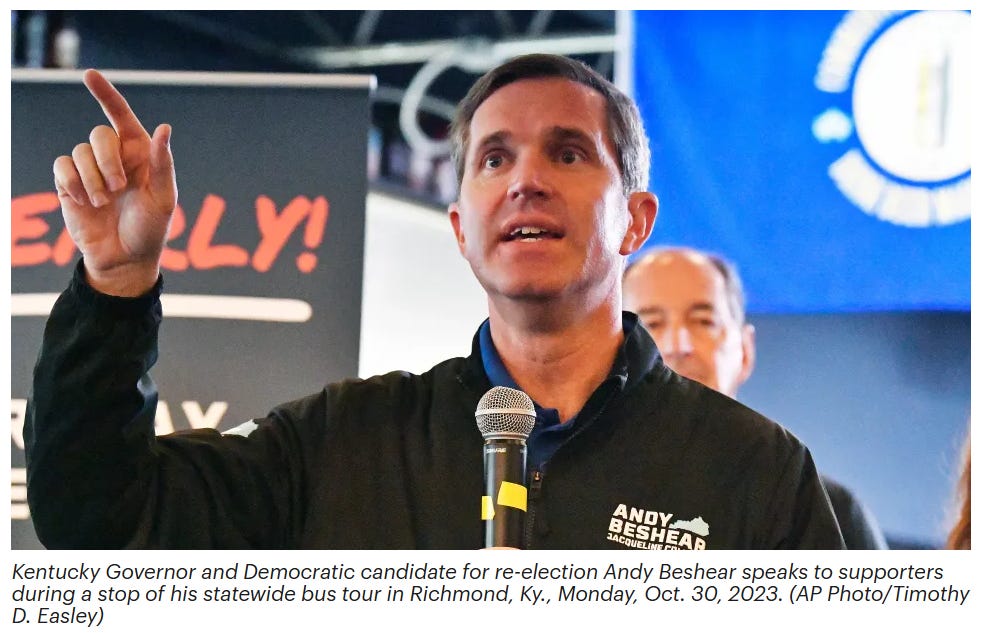
Beshear’s record speaks for itself. According to the DFL website: “The Beshear administration has secured more than $35 billion in private sector investment, the most of any governor in state history, driving over 60,000 new full-time jobs and supporting over 1,100 new and expanded business projects. Under his leadership, Kentucky has achieved record budget surpluses and experienced historically low unemployment rates.”
That’s a resume most governors envy. It also gives weight to his central message: Democrats need to stop using jargon like “justice-involved individuals” and start speaking “normal language,” as Paula Chesley, who attended the event, shared with us. Beshear understands the reputational damage Democrats have inflicted by importing language from sociology seminars into everyday conversation. Surveys confirm it: people dislike Trump, but they dislike Democrats even more.
The polling points to two areas where the DFL could gain traction with voters, if they develop a coherent plan: the economy and immigration.
The Economy
Ditching classroom scrubbed language for plain speech is necessary. But it’s not enough. The DFL must demonstrate that it can improve people’s economic lives, that working people can earn wages to raise families and afford healthcare. While Republicans have lost credibility on the economy, that hasn’t automatically benefited Democrats. Minnesota needs a comprehensive state economic plan.
Agriculture accounts for roughly 15% of the state’s total economic output and supports over 320,000 jobs. Tariffs and climate volatility have made farming increasingly precarious, an opportunity for the DFL to build a stability plan. Meanwhile, Minnesota’s urban centers are scrambling. Minneapolis pins hope on the 2028 NFL Draft, but one-off events are short-term boosts; most of that revenue flows to downtown hotels and restaurants, not throughout the regional economy. We need something with real reach.
Rochester offers one model: a strategic focus on healthcare and life sciences, advanced manufacturing, technology and software, and education. We don’t need to copy it, but we do need a regional plan that actively encourages businesses to locate here. Right now, a company considering Minneapolis faces a wall of regulations and taxes first, amenities like parks, schools, and community come second, if at all.
Outsiders see instability and chaos. There are real differences between the state DFL’s message and Minneapolis’s more DSA-aligned wing. But unless you’re deeply embedded in local politics, you won’t grasp those distinctions. What you see instead is a city divided, one that seems hostile to the conditions that attract jobs and investment. The math is simple: we cannot shrink the tax base by driving out employers while expanding government employment.

Immigration
Minneapolis residents earned the recognition they received for their response to ICE enforcement. At great personal risk, many stepped between federal agents and their immigrant neighbors. We showed the world what people-powered resistance looks like when facing government overreach.
But what’s next? Opposing Trump is part of the answer, though without Senate control, Democrats will be reduced to Instagram complaints. The harder work begins with sanctuaries that actually function.
Minneapolis welcomed a large influx of Ecuadorians fleeing gang violence and economic collapse. That was the right call. But it requires a real plan. When these families enter our schools, we need Spanish-language teachers to support them. Without that preparation, something dangerous happens: residents who initially supported sanctuary policies watch their schools and neighborhoods struggle under the strain and grow resentful. It’s not racist to demand that politicians who pass sanctuary policies fund the services those policies require. When they don’t, it reads as precisely the kind of poor governance that pushes people away from the DFL, and into the arms of alternatives.
Republicans understand this vulnerability well. They’ve bused migrants to blue cities, then deployed a media apparatus of cable news and content creators to document the resulting chaos. A strong DFL immigration policy must be both enforceable and affordable. Without it, the party will remain a target.
Reckoning
Both party conventions, DFL and Republican, offered ample evidence that it might be time to rethink the endorsement process altogether. The Los Angeles mayoral race provides an instructive contrast: their jungle-primary system advances the top two vote-getters regardless of party backing. Right now the race for second is a toss-up between the reality-TV figure Spencer Pratt and Councilwoman Nithya Raman, with incumbent Karen Bass holding a lead.
Many Minnesota candidates are ignoring party endorsements. It raises an obvious question: what’s the point of all that energy and money?
Ken Martin, the DNC chair, was forced to release the party’s after-action report from the last presidential election. One of the less discussed points: the party spends too much time talking to itself and not enough time in the communities it claims to represent. Most voters don’t care about internal party machinery. They want results. They want jobs, schools, healthcare. They’ll support any candidate who credibly promises to deliver those things.
If the DFL wants to expand its base, the answer is clear: listen harder to the obstacles people face, then build policies that address them. Explaining those policies in normal language only works if the DFL has actually done the work to produce results. Words come second. Delivery comes first.
Thank you for reading.


