


Lyndale Avenue Reconstruction
On Monday evening, business owners along Lyndale Avenue invited Mayor Frey to the Uptown VFW for a listening session. He may have thought he was walking into a respectful gathering. Instead, he found himself in a standing-room-only rally, business owners and their supporters on one side, biking advocates seeking to preserve the latest design on the other, and a large contingent of Minneapolis press documenting every word. Everyone came ready for a fight.
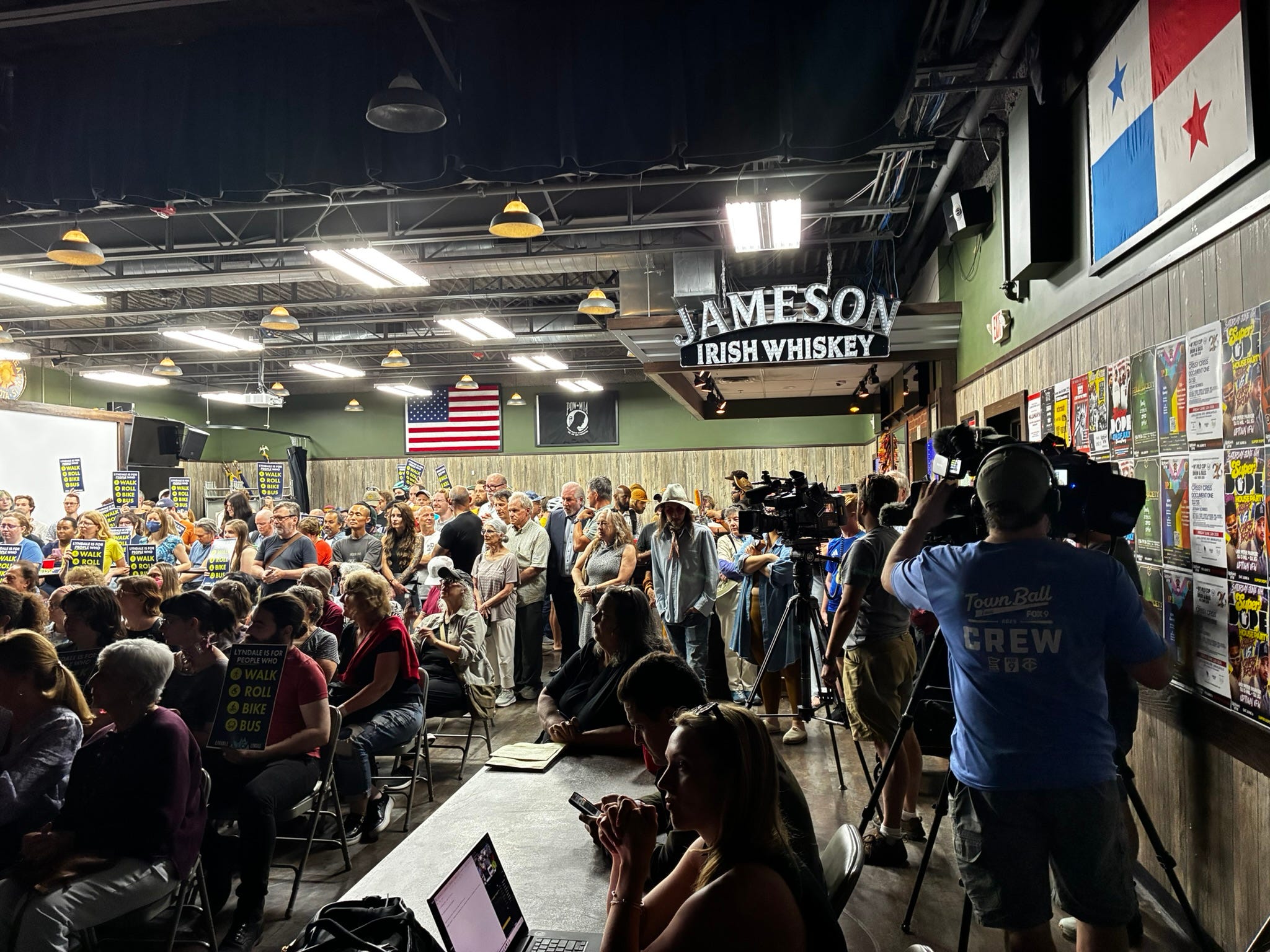
Hennepin County controls this project. Lyndale Avenue is County Road 22, so the county manages the budget and leads the design process. However, because the road runs through city limits, the city council and mayor must approve the design. If the two parties disagree, state law provides a dispute resolution process. The county has a website with detailed project information for those who want to dig deeper.
Business owners fear the current plan will hollow out the corridor, just as it has along Hennepin Avenue. When they pleaded for a slower timeline or design changes, bike supporters responded with boos and dismissive remarks. The message was unmistakable: we don’t care if your business survives.
Several concerns raised during the meeting validate their worries. First, the newly opened Hennepin Avenue shows what’s at stake. A concrete median down the middle narrows the road and stalls traffic whenever someone parallel parks. Emergency vehicle access becomes a nightmare if an accident occurs, and accidents will happen. Just weeks ago, a car flipped onto the sidewalk in front of the C.C. Club. Now imagine that scenario on Lyndale Avenue when traffic has nowhere to go.
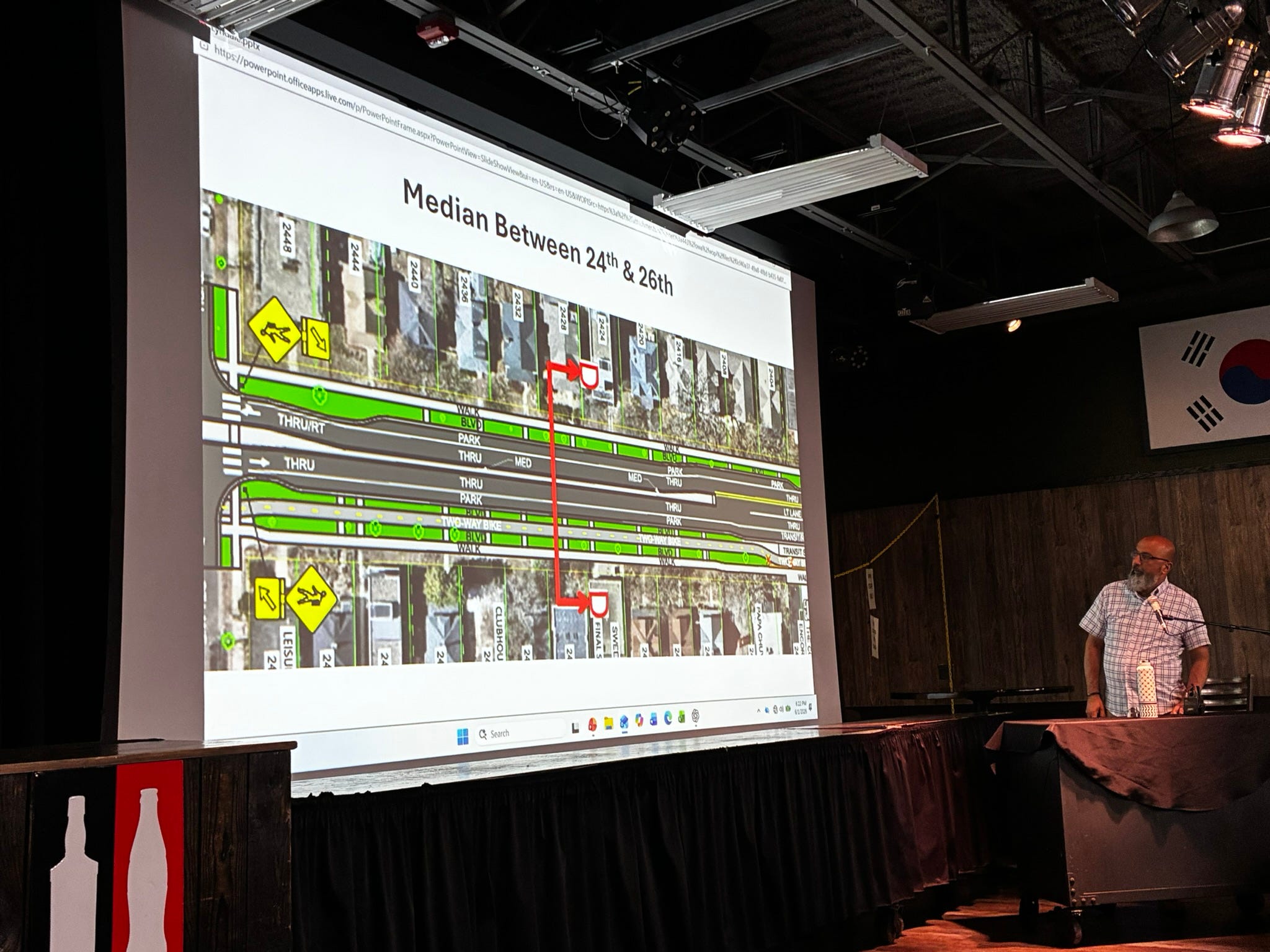
Then there’s winter. Snow removal in Uptown is already a mess; many people avoid the neighborhood between November and March because parking and navigation become nearly impossible. With the street, bike lanes, and walkway all needing snow removal, where to put it becomes a challenge. The city could haul snow away in trucks, but that’s expensive and time-consuming. Biking is nearly non-existent during this time period. Add two years of construction, narrowed roads, and fewer parking spots, and you’ve guaranteed a winter parking catastrophe that extends well beyond the project timeline.
The third issue: business survival during construction. Two years of disruption will empty the corridor. According to Mayor Frey, there’s no money to help. That’s unacceptable. The county and city need to either shrink the timeline to one year, even if it means three construction shifts daily, or provide direct financial support to affected businesses. It’s inexcusable. Carol Becker reported in the Minneapolis Times in December that the city budgeted $150,000 for a consultant to lead the Prince Sing-Along. If I owned a business on Lyndale and the city told me there’s no reconstruction assistance available, I’d stop believing anything they say about priorities.
Mayor Frey spoke for about ten minutes at the end. He didn’t commit to any specific actions if the city council approves the design this month. But he stayed after the event, talking to people who were openly hostile. That matters. Most politicians leave quickly when crowds turn cold. He didn’t. His willingness to engage, even with critics, stands out.
The People’s Way Is a Long Way from Completion
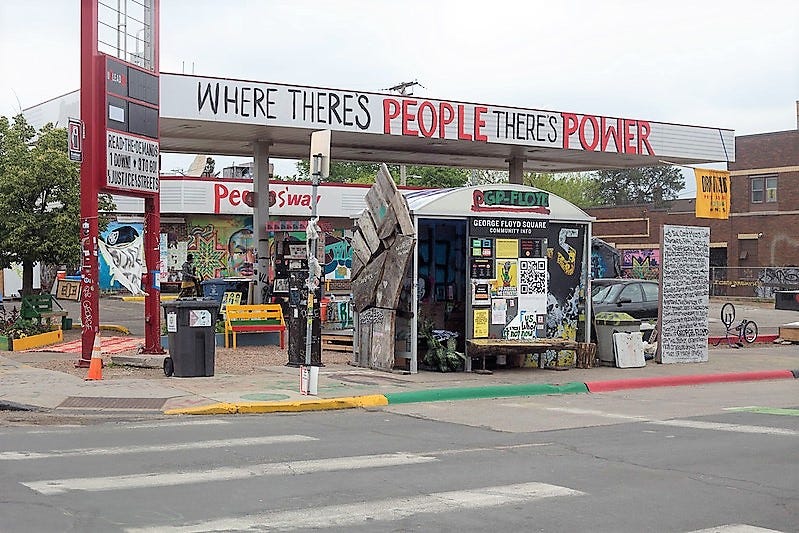
The Business, Housing & Zoning Committee voted to deny the city’s recommendation of the Agape Movement for redevelopment of the Peoples’ Way. Ward 9 Council Member Jason Chavez brought the motion, supported by Jamal Osman, Aurin Chowdhury, and Aisha Chughtai. They chose denial, rather than sending the decision back to staff, specifically to preclude Agape Movement from future consideration.
It was the right call. Agape Movement wasn’t ready. As Chavez and Ward 8 Council Member Soren Stevenson pointed out in their press conference, the group lacked “the right experience and support” for the project. Council Member Shaffer questioned the group’s finances. Agape operates both an LLC and a nonprofit; the city has a contract with the LLC, but city representatives couldn’t explain what was in it or how much had been spent.
The city stipulated that development must be conducted by a nonprofit. That restriction may be shrinking the pool of qualified applicants. The project is back to square one if the full council votes to uphold the committee vote. The city may want to drop the requirement that the process be led by a nonprofit. Let for-profit developers bid. Add a stipulation that they partner with a nonprofit, the final design and city sign-off will protect community interests regardless. There’s no reason to disqualify capable developers just because they’re in business to make money.
Division Comes with a Cost
Driving through Theodore Wirth Park on Tuesday afternoon, Minneapolis felt like a great place to live. People were biking, running, golfing in the sunshine, from a distance, they looked like they didn’t have a worry in the world. Walk into any Minneapolis meeting about biking, transportation, public safety, or economic development, and the mood shifts completely. You feel the weight of every ideological division the city carries.
Listening to the protesters on Monday, I was struck by their entitlement, arrogance, and ableism. They were young with few physical limitations. They were also 99% white. Few BIPOC voices were present, let alone leading the charge against small business owners. Their sense of injustice runs far deeper than bike lanes.
As one speaker pointed out, the protesters aren’t fighting Elon Musk or Walmart. They’re fighting yoga studio owners, dry cleaners, and restaurant operators. Most of these business exist on very small profit margins. They are people who almost certainly vote progressive. The protestors acted as though the jobs and tax revenue these businesses provide have no bearing on the community’s success.
The protesters are a vocal, organized minority who don’t recognize how many depend on vehicles not by choice, but out of necessity. They remind one of MAGA supporters, loud, angry, convinced they’re not being heard (despite prioritizing their voices in the design process), and utterly indifferent to anyone who disagrees. Drive down Hennepin, Blaisdell, or Bryant and you can see exactly who was heard.
The Minneapolis City Council and Hennepin County Commission listen to these activists because they’re organized and visible. But that minority view doesn’t represent most residents. Most people drive. Most business owners are trying to rebuild after six devastating years. The city is driving out the families and entrepreneurs invested in seeing Minneapolis recover by prioritizing ideology over neighborhoods’ economic survival.
If you want to be heard, listen first. Show respect before you demand it.
Thank you for reading.


