

It’s the State Fair’s final weekend, an event that marks the end of summer. This year we find ourselves contemplating the meaning of another mass shooting. As we learn more about what led to the tragedy, we’re hopeful the city can mourn those who were lost, appreciate the bravery of the MPD, and come together with wisdom and compassion to find ways to prevent this deadly violence. Minneapolis doesn’t have to be defined by these events.
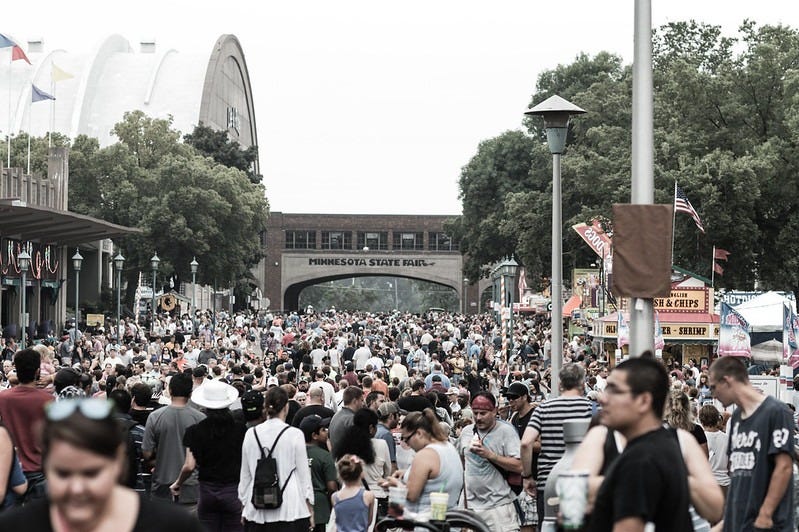
My editor and I didn’t attend the fair this year. We’re not opposed to it, but it doesn’t excite us the way it does many of our friends and neighbors. Any event where we feel like cattle being shepherded from one feed lot to the next, sweat pouring down our faces, tends to lower our enthusiasm. If there’s a concert we’re excited to see, we go, but there wasn’t one this year, so we opted out of the heat, dust, and crowds. The fair is the kind of event that makes many introverts shrink into their shells, and that’s the case here. We’re glad for those who find it a source of pride and a place to strengthen their sense of community.
The Renaissance Coalition on reviving the Warehouse District
The interview with Joanne Kaufman and Randy Larson of the Renaissance Coalition was scheduled weeks ago, and we’re excited to share it with readers. Minneapolis needs a vision for its future. Honoring the past, and learning from it, is essential to charting the future, but we can get consumed by our missteps and let our sense of what’s possible narrow. This applies as much to cities as it does to individuals. Unless we practice focusing on the present and what comes next, we risk becoming fixated on the past. It’s this tendency that made us glad to learn about the Renaissance Coalition, a public-private partnership putting forward ideas to revive downtown’s Warehouse District.
Summary
Larson describes the coalition’s work as a catalyst for change. “What we want to do is get people to imagine what a long-term vision of that area could be,” he said. Toward that end, the coalition has put forward a range of ideas in its vision statement, which is available on its website.
While remaining realistic about what they can achieve, the coalition is floating some bold ideas, such as turning floors of the ABC parking ramps into “barking lots” for dogs and their owners, along with cafes and outdoor spaces. They’d like the area to become more of an arts and entertainment district, similar to what Kansas City has done with its Power & Light District. A major street reconstruction project is slated for 2028, but the coalition is already thinking beyond it. Their vision includes more storefronts with accessible shops, art galleries, and live music venues to draw people into the area. Sidewalks will be twice as wide as they are now, a change they believe will encourage people to walk from shop to shop while taking in the historic district. They point to the successful conversion of the Kickernick Building into artist lofts and galleries as an example of what’s possible.
We discussed the benefits and drawbacks of moving bus traffic off Nicollet, the importance of street-level retail, and the public transportation options for reaching the area. People and light are key to improving safety there, according to Larson. Kaufman described a recent meeting with a group of architecture students from Dunwoody, where she encouraged them to come up with ideas for filling vacant lots. Turning them into green space for pop-up makers’ markets and ice-skating rinks were among the possibilities discussed.
For any of these ideas to gain traction, partnership with the city is essential. For now, that means planning assistance from CPED and flexibility on permitting. Private investment and responsible capitalism are key to revitalization. To attract that kind of investment, city leaders need to broaden their priorities toward policies that welcome businesses. Revitalization creates jobs and increases tax revenue through higher property values and retail sales.
People who invest in businesses and property in Minneapolis have something to lose if the city doesn’t get economic development right. That gives them a significant incentive to see improvements happen and a willingness to work toward them. We can’t treat all capitalism, investment, and development as dirty words if we want our city to grow and prosper. The reason we invest large sums of taxpayer money in public infrastructure is so people can get to work, shop, and enjoy amenities like the Lynx and Timberwolves. We won’t always get the balance of public dollars and private investment right, but we have to keep trying. Our park system is beautiful, but reviving Minneapolis will take more than that. We need leaders, public and private, working to attract people willing to invest in their visions, and those people need assurance that city officials will be reliable partners.
We’re hopeful the Renaissance Coalition succeeds, and that the city embraces people willing to bring their vision, resources, and talent to building a great city. We appreciated Kaufman’s reminder that “sometimes the craziest ideas are the ones that work and get the most legs.”


