

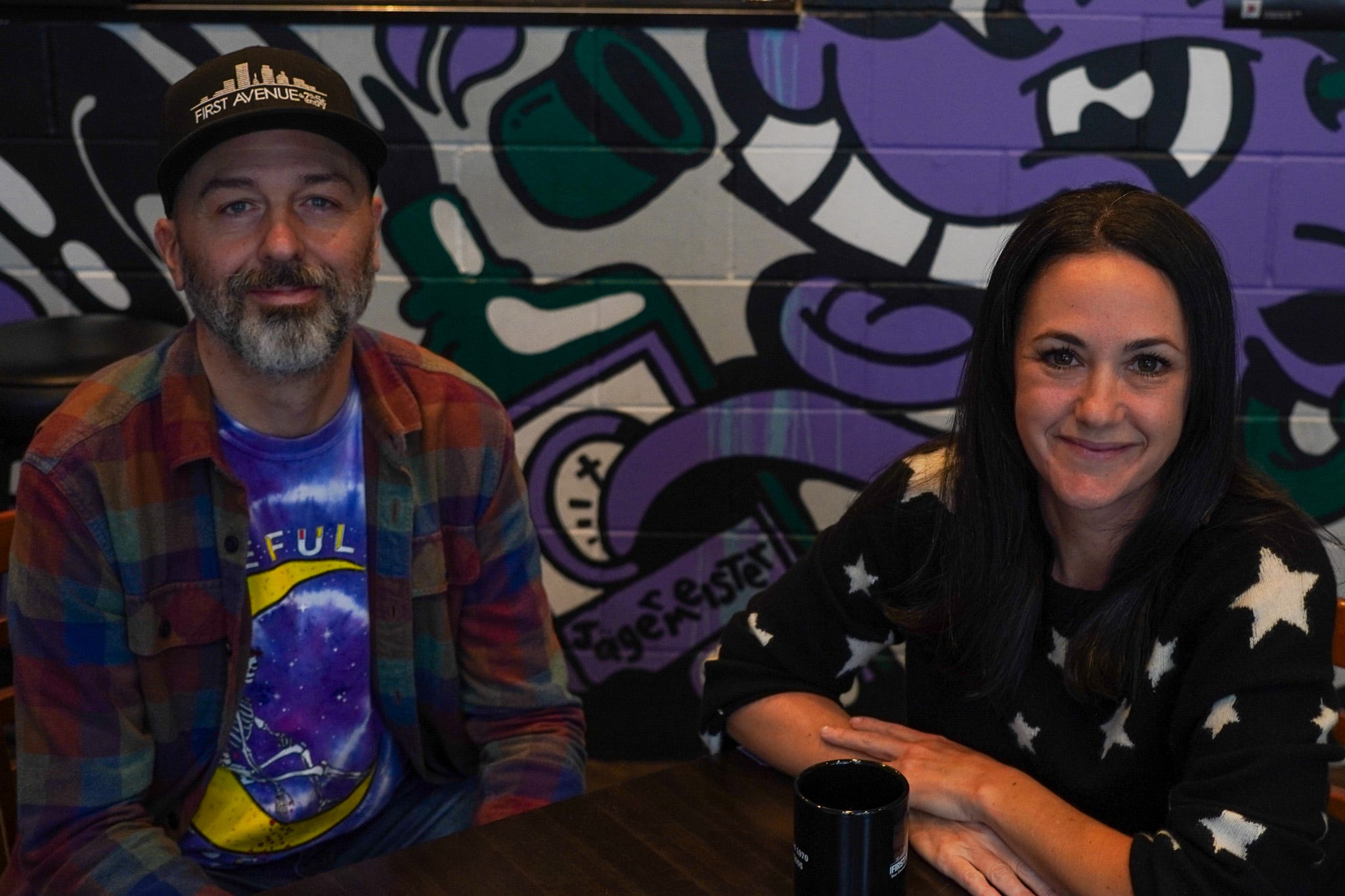
I don’t usually conduct interviews in bars, but I may have to start doing it more often. For this interview with First Avenue Productions owner Dayna Frank and Nathan Kranz, its chief revenue officer, we met at the Depot Tavern, which is attached to the 7th Street Entry and First Avenue venues. It was a fun and engaging conversation.
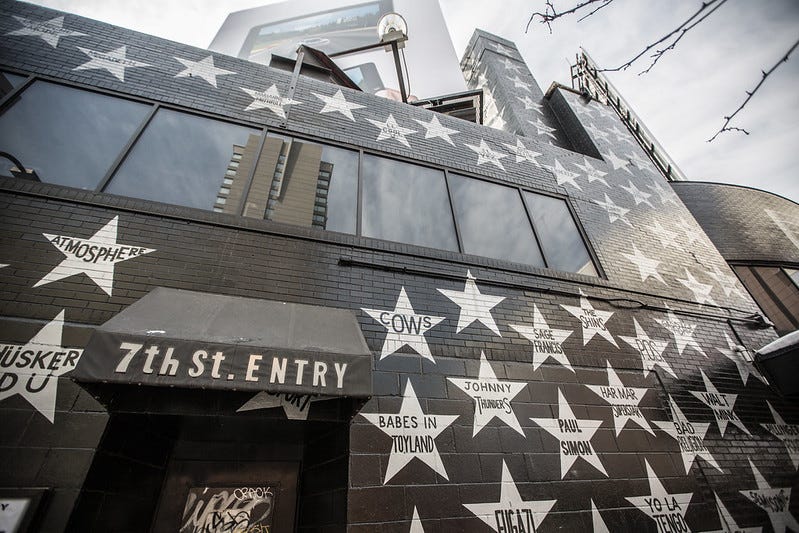
When talking to a nonresident about Minneapolis, it’s almost inevitable to mention First Avenue. The venue has created a significant amount of colorful history in its 56 years, and it remains the epicenter of live music, putting on shows every night of the year. According to Kranz, they draw over 300,000 people to downtown Minneapolis.
“I feel like it’s our responsibility to make [their] night the very best night of someone’s life. It doesn’t matter if there’s four hundred people in the main room or sixteen hundred people . . . they got off the couch, they went to park, they bought the ticket, they picked out a new outfit, and we owe it to them, we owe it to the band to make that experience as special as we possibly can,” Frank said.
In addition to First Avenue, 7th Street Entry and the Depot Tavern, First Avenue Productions owns the Turf Club, the Palace Theatre, the Fitzgerald Theater and the Fine Line. Under Kranz’s direction, the company promotes bands in Duluth and elsewhere around the state. In August 2027, they will begin hosting shows at the new Upper Harbor Terminal amphitheater, a project they have been working on since 2016. They would like to be recognized for their contribution to the local economy.
Much of our conversation centered on “mandate layering,” a term that was new to me. It describes how the city and state often fail to recognize the combined impact of the separate mandates they pass. It’s sometimes referred to as tax stacking. For example, when First Avenue has live music, the sales tax on drinks is 17.5%, the highest in the country. “We quite literally get punished three percent on drink sales by having live music,” Kranz said. “The rate is about 14.5% when we have a dj instead.”
On top of the taxes on drinks, there is a 12% tax on ticket sales, and venues must withhold 2% of each visiting band’s payment to cover a nonresident tax. “We can’t be the receptacle or the piggy bank for everything that needs fixing in the entire state,” Frank said. Kranz pointed out that Minneapolis is often compared to Denver for music, and highlighted that Denver has made the decision to help the small and medium-sized venues by not taxing ticket sales.
The result for local entertainment is a kind of “trickle up” economics. Smaller, locally owned venues pay taxes that support large venues like the Minneapolis Convention Center and Target Center, instead of revenue from those large venues supporting the local businesses that make Minneapolis unique. “No one leaves a basketball game and buys a ticket to a show,” Kranz said. “I don’t want to frame it as we’re doing too much for the convention center. I think we’re not doing enough for the people, particularly in our business, in our business of smaller to midsize live music. I think we could be treated differently and supported a little bit more than we currently are.”
Minneapolis could give downtown restaurants and entertainment venues a one-month tax holiday. That breathing room would help them keep up with rising costs for insurance, rent and staff, and free up money to upgrade their spaces and market themselves.
Minneapolis Must Help Small Businesses With Road Reconstruction
The city must work with businesses along 1st Avenue when road reconstruction begins. Utility work is set to start in 2027, followed by two years of reconstruction. Sidewalks will be widened to 10 feet for pedestrian safety, and traffic will be kept to one lane in each direction.[1] Businesses keep having obstacles thrown at them, and many haven’t survived. If the city and state make the burdens too onerous, businesses will set up shop elsewhere.
We wrapped up by talking about the fun parts of their work, like helping new bands get their start at the 7th Street Entry and preparing the Upper Harbor Terminal amphitheater for its first concerts next year. It was clear that they are dedicated professionals willing to put in the work to give people an excellent experience when they come out for a show.
After the interview, Frank and Kranz showed me the inside of 7th Street Entry, one of the few venues they manage that I hadn’t been to. On the way out, I was holding the front door as we discussed predatory ticket resellers [2] when a man came up to relieve himself in the entryway. He moved on after he saw us.
Along with city and state taxes, downtown businesses also pay into the Downtown Improvement District, which helps with street sweeping, graffiti removal, safety ambassadors and public space management.
Striking the right balance between services, taxes and businesses is never easy, but cities that take their local economies seriously tend to find it. Minneapolis faces real challenges, and working through them will take honest civic debate. Live music deserves a place in that discussion.
[1] https://www.minneapolismn.gov/government/projects/1st-ave-washington-ave-8th-st/
[2] Note from First Avenue: Predatory resale is a huge problem for independent venues like First Avenue and for the fans who support live music. Third-party resale sites often advertise tickets at inflated prices, sometimes before tickets go on sale. Some sellers don’t even have the tickets they’re advertising. These are called spec, fake or ghost tickets. These sites can also make themselves look like official venue box offices, misleading fans into paying far more than face value. They buy the top links on Google and disguise themselves as legitimate. The safest way for fans to buy is directly through First Avenue’s official website, first-avenue.com, which has legitimate ticket links for every show. Buying there means fans get real, verified tickets, pay the intended price and avoid unnecessary markups and potential scams. First Avenue’s goal is simple: Tickets need to get into the hands of actual fans at fair prices, not become a profit opportunity for ill-intended brokers and middlemen.


