

For this interview with Minneapolis Council President Elliott Payne, I visited his new office in City Hall. If you haven’t stopped by since they finished the $30+ million remodel, it’s worth a look. They did a nice job. When I passed through the lobby, there was a couple taking wedding photos and a woman using a keyboard to play the bells ringing atop the building. The marble is polished, the carpets new. It feels like a place where serious governing could happen.
Some readers may have noticed we didn’t put out a newsletter last week. We were busy moving our youngest to Montana State University for his sophomore year. We wore ourselves out loading and unloading furniture, assembling lamps and chairs, and shopping for various necessities. He’ll be living with four roommates, and we’re cautiously optimistic that he’ll attend classes and do the work.

Minneapolis has its share of expensive restaurants, but I think Bozeman has us beat. You won’t find a bison burger for under $24 on Main Street. It’s like eating at the Minnesota State Fair every day! Speaking of the fair, and who isn’t these days, Council Member Payne counts himself a traditionalist who seeks out cheese curds every year. As seems mandatory this time of year, we started our conversation by discussing his experiences at the fair. He recalled walking with Richard Carlbom as the party chair tried to convince people that the DFL is still a big tent, after the endorsement of State Senator Omar Fateh at the DFL city convention was rescinded. Payne saw the reversal as divisive, and it appears the party is still trying to recover. According to Payne, the split is perpetuated largely by campaign staffers and communications people. The recent primary between Flanagan and Craig has now concluded, and we’re hopeful the two factions can move past the divisions generated by a hard-fought campaign.
The main focus of our conversation was housing. At a recent Theater of Public Policy event hosted by Danger Boat Productions, we watched Mayor Frey and Council President Payne discuss their positions on a range of city topics, and we were intrigued by the concept of social housing that Payne raised. It’s a concept with a shifting definition, but it remains a solution for housing affordability favored by many on the left end of the political spectrum. Seattle is experimenting with the idea: people across a range of incomes stay in the same housing complex, each paying a percentage of their income rather than a fixed rent. The city’s first foray into this model is the Elara at the Market apartments in Belltown, where 150 units were purchased by the Seattle Social Housing Developer. The Seattle Times describes the project this way:
Unlike traditional affordable housing, social housing includes tenants at a wide range of income levels in the same buildings. Popular in Europe, the goal is to subsidize more affordable rents for low-income renters, reduce economic segregation, and keep the buildings affordable forever.
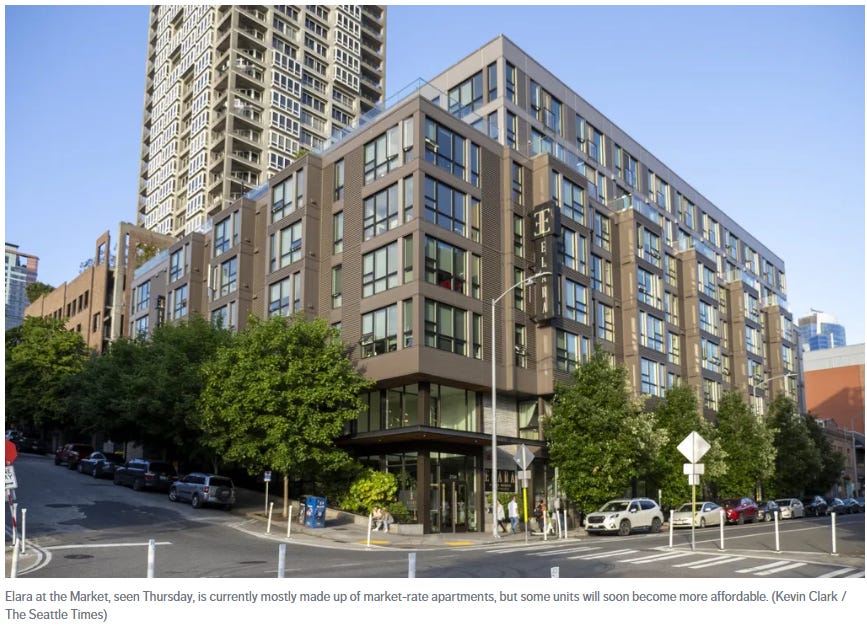
Seattle has one of the most expensive housing markets in the country, with the median home price over $850,000. For those first 150 units, the city received more than 10,000 applications. While social housing holds some promise, it’s one tool among many that are needed; demand for affordable housing is far outpacing the current pace of building. Payne likes the concept because it gives local communities more control over housing, rather than leaving them dependent on federal funding.
Whether public or private, housing must be inspected and maintained, which failed to happen at the Heritage Park housing project. Payne and I discuss what occurred there and what still needs to happen to ensure residents are treated with dignity. So far, the city has spent $2.5 million diverted from the Affordable Housing Trust Fund to relocate residents, and the final total remains unknown. A review of what happened is coming, and possibly reforms as a result, but for now Payne is focused on centering the people affected by the housing’s decline.
It’s budget season, and there are many opinions on how close Mayor Frey came to getting it right with his proposal. Council Member Payne and other council members are questioning whether more can be done to trim the Minneapolis Police Department’s budget, which they see as a significant driver of rising costs. To close budget gaps, Frey is proposing the consolidation of some departments, including merging the Human Resources and IT functions of the Minneapolis Parks and Recreation Board with the city’s. The next step in the process is for the Board of Estimate & Taxation to set the maximum property tax levy. Payne sits on this board, as does the mayor, and it will be interesting to see where they land. MPRB President Tom Olsen, whom we interviewed previously, is also a member, and we expect to hear further debate over the difficult choices ahead.
Our conversation concluded with a focus on Payne’s Northeast ward. He highlighted the Central Avenue reconstruction and the push for an Arts District walk. Public Works will need to replace the historic bricks along Quincy Avenue, but it sounded like Payne is working to preserve the neighborhood’s charm and character.
Literary Note
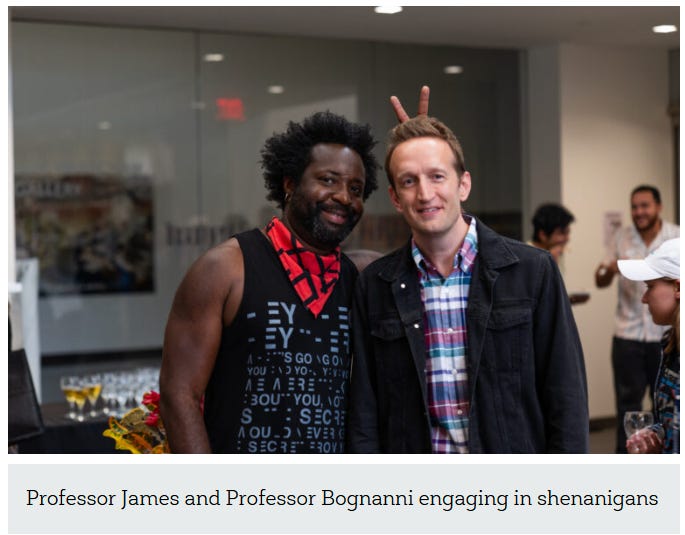
One of my favorite authors, Marlon James, has a new book out called The Disappearers. The New York Times review called it a “masterpiece” and described it as a story of gay experience and murderous homophobia in Jamaica that amounts to “a maximalist’s banquet.” James isn’t for the faint of heart. We discovered him through his Booker Prize–winning A Brief History of Seven Killings. The reviewer, Dwight Garner, has written for the Times for almost three decades, and this book stands out even for him. He expects James to win the Pulitzer Prize at some point. If that praise isn’t enough, maybe it will interest local readers to know Macalester College hired James in 2007 to teach English, and he became a professor emeritus there in 2023. I envy those who got to take one of his classes. In addition to the Man Booker Prize in 2015, he’s received the Minnesota Book Award for Fiction in 2010 and 2015, and the Dayton Literary Peace Prize in 2010.
At over 600 pages, the book will take time, but we’re committed to both starting and finishing it, though we might have to clear the calendar to make it happen.


