


It increasingly feels like, instead of working together on city priorities, our elected officials are creating Instagram content about their positions.
The City Oscars
Operation Metro Surge changed the city in many ways, few of them beneficial. City council members took to the streets as on-the-scene reporters, documenting ICE activity along with their reactions and commentary. At times, it felt like watching a weather reporter standing knee-deep in the ocean, bracing against the wind, warning that a hurricane was about to make landfall.
The surge has subsided, but like a hurricane, the cleanup will be difficult. There is real damage, and now the city must move forward without national media attention or federal support. That means focusing on the basics: setting priorities, managing budgets, increasing accountability, and tracking results. These are not glamorous tasks, and they rarely translate into social media engagement.
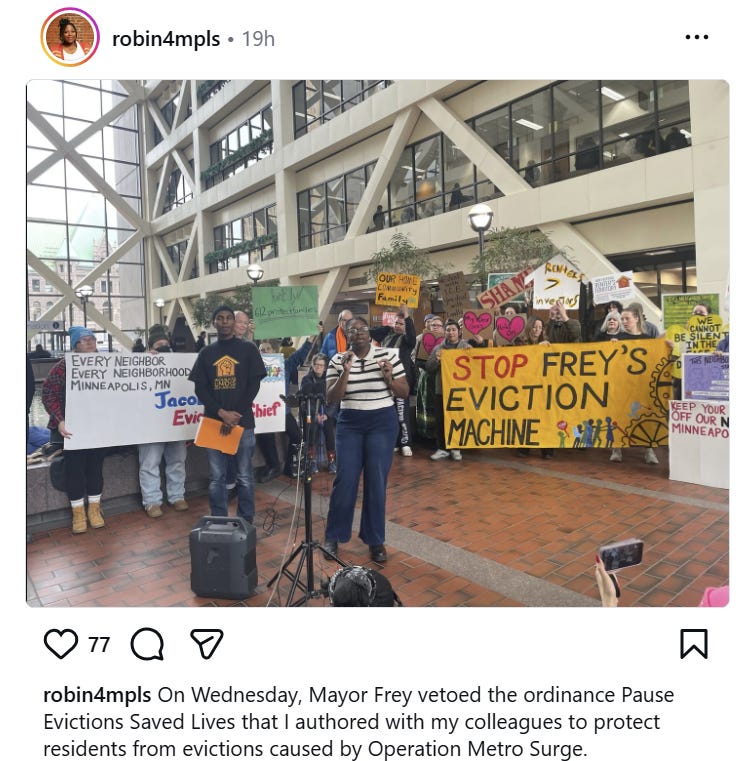
Governing by video, posting clips and rallying followers to pressure the mayor, is a poor substitute for collaboration. Take the recent proposal to extend eviction notice requirements from 30 to 60 days. The council passed it knowing the mayor would veto it. That is not strategy, it is performance. And it comes at a cost to the city.
The ordinance, led by Robin Wonsley, will return to the council on March 26 for a potential veto override. It is possible they will succeed, but unlikely. They would need two additional votes to reach nine.
Cop City
Community Safety Commissioner Barnette has proposed a new Community Safety Training and Wellness Center with an estimated cost of $40 million. While some critics have labeled it “Cop City,” the facility would serve multiple departments beyond the Minneapolis Police Department. It would support training for 911, Behavioral Crisis Response, Emergency Management, Fire, and Neighborhood Safety staff.
The City Council is expected to scrutinize the project’s cost and value, as it would with any proposal of this scale. Some council members have already signaled opposition on social media, indicating they do not see the project as a priority.
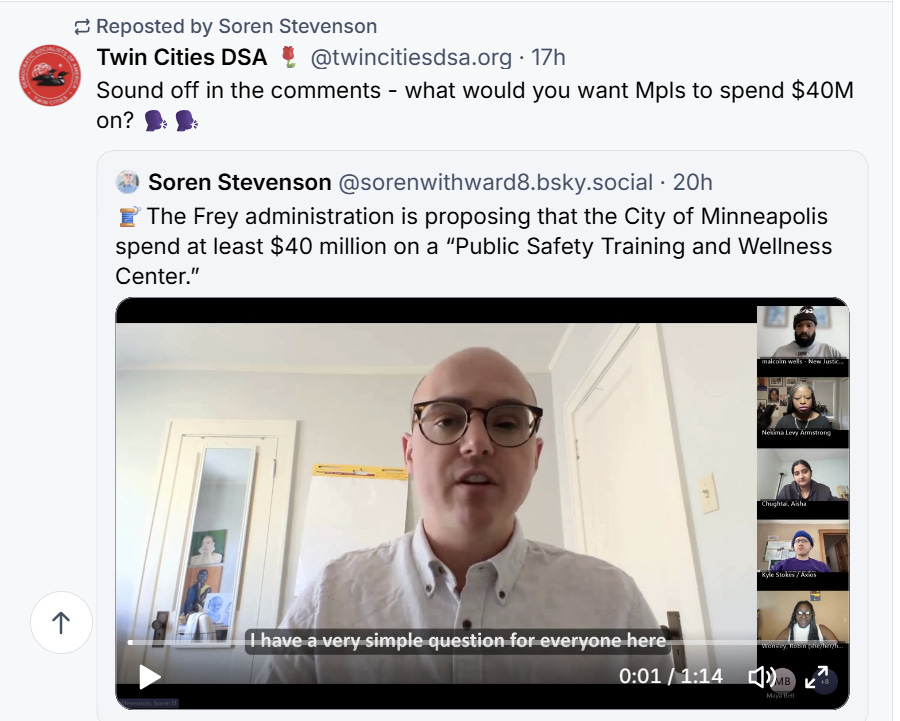
That approach could influence how funding is allocated. It may shift attention toward other priorities such as childcare, after-school programming, apprenticeship pathways, or the East Phillips Neighborhood Institute’s Roof Depot site. Social media can generate a wide range of ideas, especially from like-minded audiences. A few may be worth considering. The challenge is turning that engagement into policies that can gain broad support and be implemented effectively.
Feeding Billionaires
Minneapolis remains divided on trust in the Minneapolis Police Department. Many residents do not trust the department and view efforts to expand or support it with skepticism. Others point to open drug use and disorder as signs the city is not functioning as it should. They want more consistent enforcement and safer streets, and believe increased policing could help.
In response to these competing concerns, the city has invested significant resources in contracts with Axon Enterprise, a public safety technology company led by CEO Rick Smith. In 2024, Smith was the highest-paid CEO in the U.S., with compensation of approximately $165 million and an estimated net worth of $1.7 billion. Since 2019, Minneapolis has awarded more than $108 million in contracts to Axon. The company provides tasers, body cameras, helmet cameras, video software, and training services.
Several recent contracts illustrate the scale of this spending. Combined, they exceed the estimated cost of the proposed training center:
2025-00855
Contract amendment with Axon Enterprise, Inc. for upgrading helmet cameras for the Police Department
$16,865,241.67
2025-00445
Contract amendment with Axon Enterprise, Inc. for software licenses for body-worn cameras
$16,817,604.30
2024-01397
Contract amendment with Axon Enterprise, Inc. for TASER 10 products and virtual reality training
$16,672,816.80
The Police Department’s general fund budget can be difficult to parse, making it hard to determine total spending on these contracts. We asked whether we could observe the virtual reality taser training and are still waiting for a response.
We highlight these expenditures to point toward an alternative to debating priorities primarily through social media. Council members could instead focus on where contracts might be adjusted or reduced. These contracts also reflect the growing cost of oversight, documentation, and training tied to increased regulations.
Quiet Contract Review
Minneapolis could benefit from an independent budget and contract review function similar to the Congressional Budget Office. A team of nonpartisan analysts reviewing budget decisions and their impacts could help build trust between the mayor and City Council, and with a public often left sorting through competing visions.
Elected officials operate with both formal authority and informal influence. Social media has amplified that influence, allowing leaders to speak directly to constituents without traditional media filters. The roles of influencer and politician are increasingly overlapping.
Policies grounded in facts, negotiation, and shared priorities can suffer when individual budget items are put on public trial before their value can be weighed. Attention around proposals, especially those unlikely to advance, can consume time and energy that might otherwise go toward refining viable policies. At each meeting, the Council reviews dozens of contracts worth millions of dollars, along with ordinances, programs, and appointments. These actions rarely appear in social media feeds, yet their details can have a lasting impact on the city’s direction.
Minneapolis does not lack for social media influencers. What it needs more of are people willing and able to build consensus to move the city forward. They are difficult to find.


