


Impressions from the Mayor and City Council Speeches
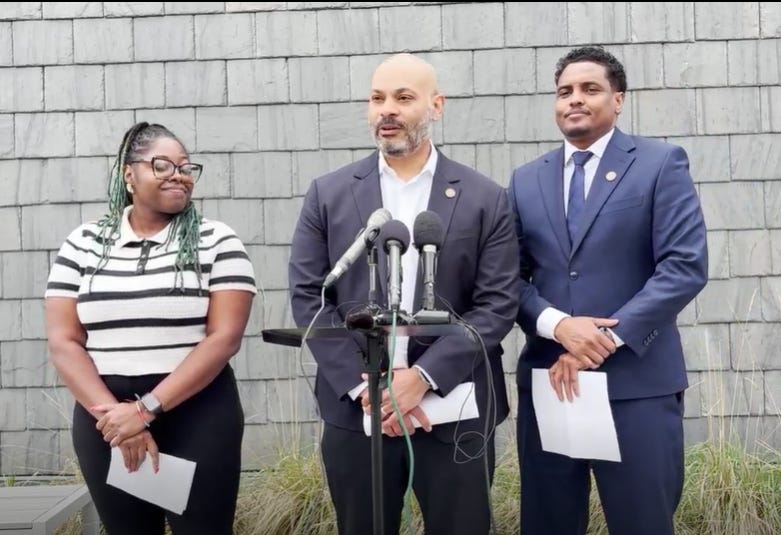
Watching the press conference in which Council President Payne, Vice President Osman, and Ward 2 Council Member Wonsley responded to Mayor Frey’s 2026 State of the City address left me with several impressions and a few questions.
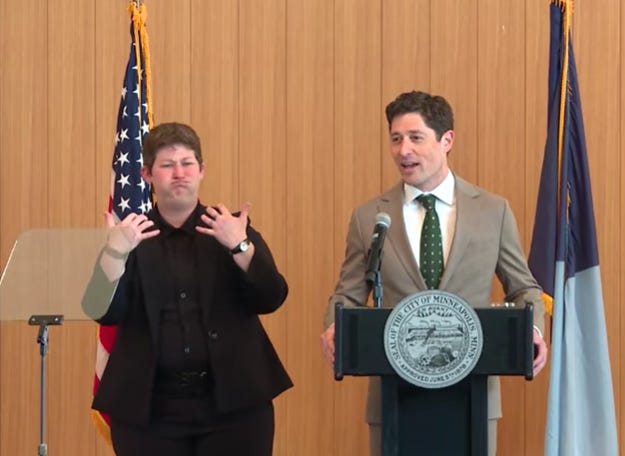
The mayor and city council have competing priorities, few shared ones, and little apparent interest in resolving their differences anytime soon. For Minneapolis, that likely means little meaningful progress, at least as we define it. Progress means a city where more people want to live: where there are good-paying jobs, safe streets, stable housing, and real opportunities to grow a family, a career, or a business. It means a thriving economy that allows people to support themselves, reducing, rather than deepening, the city's dependence on government intervention. Progress does not mean a city perpetually raising revenue to manage a growing population that is out of work, food insecure, reliant on rental assistance, or caught in substance use disorders that too often lead to homelessness and petty crime.
Many will be encouraged to hear that Mayor Frey, after eight and a half years in office, has grown less patient with open-air drug use and a depleted police force. His plan centers on increasing access to Brixadi, a long-acting addiction treatment, expanding affordable housing, and connecting more residents to county services. He noted that there are now only 239 unsheltered people in Hennepin County, all of whom have been connected with outreach teams. If accurate, that represents remarkable progress.
Mayor Frey hopes to have 800 officers on the force by the time he leaves office in roughly three and a half years. Reaching that goal will require council support, no small ask from a body that remains deeply skeptical of the department, both for its history and its current conduct. Frey can expect continued scrutiny over the police budget, the handling of domestic abuse cases and officer-involved shootings, off-duty conduct, the training center, and the long-delayed Southside Community Safety Center. The replacement for the 3rd Precinct was briefly mentioned as moving forward, but residents will believe it when the doors are open and they can walk in and speak with an officer. The facility is expected to include childcare, mental health support, and youth programming. Notably absent from the speech: any mention of Community Safety Commissioner Barnette, whose nomination remains unapproved by the council, or of Police Chief O’Hara and the question of his own confirmation.
The mayor spoke of a city government focused and disciplined about delivering on the basics. One example: the city fixed 700 streetlights, clearing the official backlog. Another: reducing permitting red tape for businesses and construction, including a bold claim that small-scale residential projects will have permits approved within one business day of application. There was an implied contrast with the council’s recent agenda items, legalizing bathhouses and drug paraphernalia among them, though the mayor was careful not to name names. While he spoke of the city’s responsibility to “set the table” for business, actual job creation received just one concrete mention: employment tied to the Upper Harbor Terminal amphitheater. One genuinely interesting idea was the mayor’s discussion of new potential uses for TIF, Tax Increment Financing, a public financing tool that uses future property tax revenue gains generated by a development to fund the project itself, to help large retail spaces downsize into smaller, more accessible storefronts.
One area of apparent agreement between the mayor and council is the need to help small businesses recover from Operation Metro Surge. Worth noting, however: the $7 million set aside for that purpose covers reduced fees and event permits. The city is not writing checks to small businesses, it is simply collecting less revenue from them.
How to Know if You’re Working Class
Council President Payne spoke about the council’s role “to bubble up the priorities of our community,” describing a working-class agenda built around dignity and affordability. “Back to basics to me means living in a house that you can afford and live with dignity,” he said. Vice President Osman expressed disappointment at the mayor’s veto of the rental notice extension. The council rebuked the mayor for not working more closely with them to “advance a working-class agenda that really put the people first,” emphasizing that government is a collective enterprise, “not an individual sport.”
Listening to the council’s rebuttal, I found myself wondering: who, exactly, is included in this working-class agenda? When they say “working people,” they appear to mean something more specific than people who work. I spend most of my time on this newsletter and seeking contract communications clients. I work out of a nontraditional space, without a salaried employer or benefits. Am I working class? Perhaps it’s the English degree that disqualifies me. Or perhaps it’s the absence of union membership, though plumbers, electricians, and carpenters earn significantly more than I do at the moment. Teachers, despite their advanced degrees, are generally considered working class. Nurses too. Doctors are not. Where does an artist who left Macalester to sell their work fall? Which council members are working class? Council President Payne, who moved to Minneapolis in 2000 to study mechanical engineering and later earned an MBA from the Carlson School of Management, earns $110,000 a year in his current role. Is he working class?
The point is not to ridicule anyone. It’s to suggest that “working class,” as used in local politics, has become too elastic to carry real meaning. It functions as a political signal, a way of saying we’re on the side of real people, while quietly coding for opposition to corporations, property owners above a certain threshold, and business owners who object to drug use on their block. If we use the DSA’s definition, working class is determined by one’s relationship to the means of production: if you sell your labor and don’t own the enterprise, you are among the roughly 80% of Americans who qualify. Under that definition, I was working class even when I was in corporate management. I doubt that’s what Council President Payne has in mind.
The Budget Battle to Come
While the definition of “working class” may seem academic, it will have real consequences in this year’s budget process. Mayor Frey warned that “getting serious will mean hard conversations about programs or investments that aren’t working.” Council Member Wonsley has said repeatedly that she wants economic development distributed across the city’s neighborhoods rather than concentrated downtown. A tool like TIF, which primarily benefits property development, may struggle to earn council support if it’s seen as favoring developers over working people. Our concern is straightforward: when businesses and investors perceive the city as hostile to their success, they go elsewhere, and the resulting downward cycle ends in stagnation. A working-class agenda only succeeds if it attracts employers, ones willing to hire people across a wide range of backgrounds, education levels, and skill sets.
What city program genuinely helps the working class if it doesn’t result in a job? You can’t be part of the working class if you aren’t working. Mayor Frey at least acknowledged the city’s responsibility to “set the table” for business, even if the details were thin. We want the council and the mayor to agree on an agenda that favors job creation broadly, corporations and construction workers, teachers and lawyers, investors and tiny media startups like this one. The city must welcome anyone willing to invest here. Narrow the definition of who deserves to be part of the revival too sharply, and you stop it before it gains momentum.
Thank you for reading and caring about Minneapolis.
Link to the 2026 State of the City by Mayor Frey.
Link to the Council President Payne Rebuttal with VP Osman and Council Member Wonsley.


