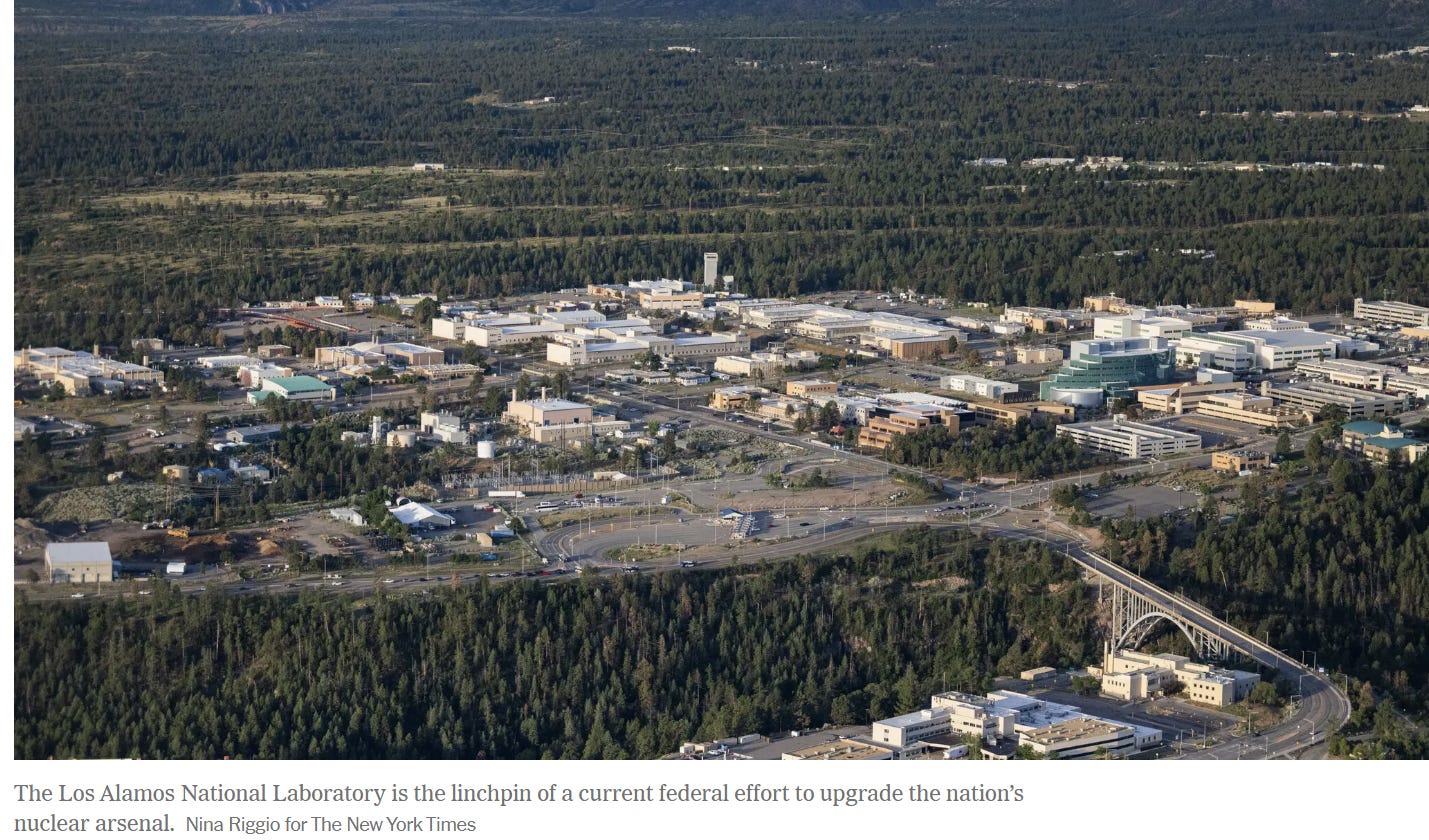
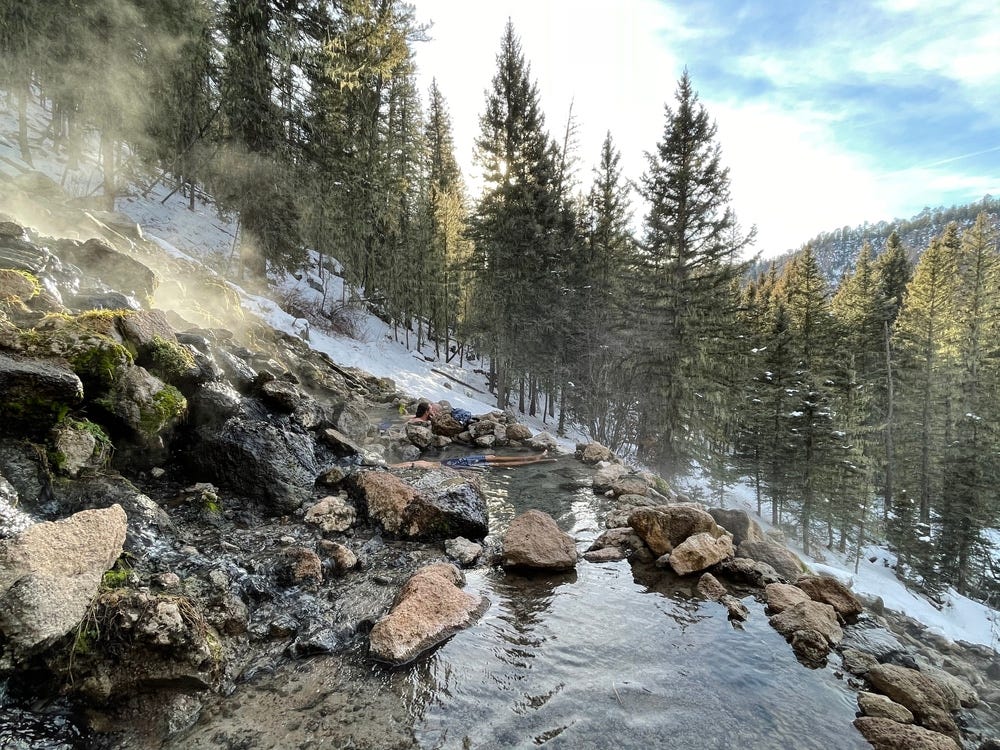
Note: We are featuring photos of New Mexico in this issue. Frank Spring is based there, and we lived in the state for five years after college. Los Alamos is the birthplace of the atomic bomb. The New York Times recently published an article about New Mexico’s fight with the U.S. Department of Energy over cleaning up radioactive waste that still sits in massive pools dating back to the 1940s. It’s worth a read: “New Mexico Rebukes Federal Agency Over Nuclear Waste at Los Alamos.”
“The continued presence of a large volume of unremedied hazardous and radioactive waste demonstrates a longstanding lack of urgency by the U.S. Department of Energy,” regulators wrote in a statement, “and elevates the risk of waste storage failures” at the lab, in northern New Mexico.
In case you missed it (ICYMI): The only remaining arms control treaty between the United States and Russia expired last week. The Department of Energy is planning to produce nuclear bomb cores at Los Alamos as part of a $1.7 trillion federal effort to modernize the nation’s nuclear weapons. Critics argue this represents another step backward in national policy.
There Are Facts, and Then There Are Government Reports
Disputes over how many people have been detained by the Department of Homeland Security are fueling disagreement and mistrust. Some government sources have claimed that 4,000 people in Minnesota have been detained. That number has been widely questioned and has contributed to growing distrust in government information. The dispute over this figure is not the only one people are debating. In the financial world, there are also doubts about reported employment numbers, job creation, and inflation.

A 2025 Gallup/Bentley University poll found that only about one-third (31 percent) of U.S. adults say they have “a lot” or “some” trust in the federal government. Recent actions by ICE agents in Minnesota, along with misleading public statements made by Kristi Noem and others about those actions, may have pushed that number even lower. Many people say they are frustrated when public officials share inaccurate figures or conflicting accounts. This frustration adds to broader skepticism about government reporting and transparency.
What has been on display for some time now is that shaping the narrative often takes priority over confronting reality. There appears to be little motivation to pursue solutions grounded in facts. Instead, the goal seems to be charting a path based on how President Trump and his allies want events to be understood. That dynamic is one reason we featured Frank Spring in today’s newsletter. Spring is a founding partner at Altum Insights and managing partner and cofounder of Undaunted Ventures. He has built his career studying how people’s attitudes and biases influence elections. His focus is on identifying the gap between facts and perception and on understanding how beliefs drive behavior.

The stories we tell ourselves about events can be more powerful than the events themselves. This administration has placed heavy emphasis on shaping those narratives. What we have seen in Minnesota is a shared determination among residents to define that narrative for themselves. The broader lesson is clear: collective action can shape public understanding. When people come together to tell their own stories, they can influence how their community and the wider world interpret what is happening.
Interview Summary
In this interview, I speak with Frank Spring, a narrative consultant who studies how stories shape political beliefs and behavior. Spring explains that politics is not just about policies, but about the stories leaders tell and the stories voters tell themselves about who they are and what their country represents. He says the current administration believes there is a “silent majority” of Americans who feel threatened by immigration and social change. In response, leaders have tried to create strong narratives about crime, disorder, and the need for crackdowns in cities like Minneapolis.
Spring argues that this strategy has not worked as planned in Minneapolis. He says many Americans are not strongly anti-immigrant but instead want an orderly and fair immigration system. When federal agents used force in Minneapolis and officials defended those actions, Spring believes it caused what he calls a “moral injury.” By that, he means people saw authorities harm others and then deny or misrepresent what happened. He says this deepened public anger and distrust, especially when videos and firsthand accounts contradicted official statements.
The conversation also explores the future of media and public trust. Spring says traditional news outlets are struggling, and more people are turning to citizen journalism and social media for information. While this shift creates risks, he believes new forms of independent and community-based journalism could emerge. He also notes growing concern about artificial intelligence and its potential to spread misinformation. Overall, he predicts higher civic engagement, stronger grassroots organizing, and significant political consequences in upcoming elections.