


Competence rarely goes viral. It does not dominate headlines or trend online. But steady, smart governance is what allows cities and states to function, and voters tend to notice when it disappears.
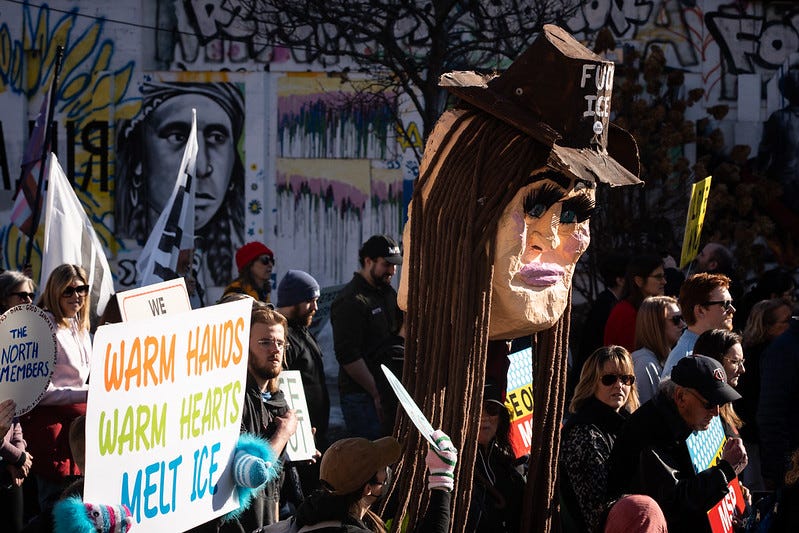
In Minnesota, Operation Metro Surge may carry long-term political consequences for Republicans. While the goal may have been short-term gains, the tactics used have likely deepened resistance in a state that already leans Democratic. Whether by design or miscalculation, the result could be that Republicans are shut out of state-wide office for many years to come.
Nationally, the political landscape remains volatile. Current projections for the U.S. House of Representatives suggest Democrats could regain control if they win the 208 seats currently rated in their favor by the Cook Political Report and capture at least 10 of the 18 toss-up districts. Given President Trump’s weak polling numbers driven by controversies surrounding Epstein, ongoing corruption allegations, immigration policy, tariff disputes, and persistent inflation, Democrats are expected to make gains. Failing to do so would raise serious questions about the party’s strategy and message.
The Senate presents a more difficult path. Democrats would need to win the 11 races where they are currently favored, secure all four toss-ups, and flip at least two Republican-held seats. That outcome is possible but unlikely. Even so, control of the House alone would provide a check on executive overreach and shape federal priorities for the next two years.
For Minneapolis residents, stability and competence still matter. The quality of governance at every level — federal, state, and local — directly affects budgets, public safety, infrastructure, and the economic health of our communities. Political strategy may grab attention, but effective leadership is what sustains cities over time.
How Could Democrats Lose Their Advantage?
If Democrats want to squander the advantage they currently hold, the most effective way might be to overestimate the appeal of an anti-Trump, pro-immigration message while underestimating how much voters value competent governance of everyday essentials: schools that balance their budgets, hospitals that remain open, safe streets, and an economy that creates opportunity.
Minneapolis may be viewed nationally as a bold symbol of resistance to federal immigration enforcement, but resistance alone does not make a city functional. No wave of admiration is forming around our school finance practices, hospital solvency, or economic competitiveness. That contrast should give DFL leaders pause. Cultural and political signaling may generate headlines, but voters ultimately judge those in power by whether streets are safe, budgets are balanced, and institutions are competently run.
Political analyst Ruy Teixeira of The Liberal Patriot argues that Democrats’ deeper problem is not messaging — it is governance. Fraud, he writes, is only one visible symptom of a broader issue: when ideological commitments and interest-group pressures outweigh the practical demands of running government well. Voters, he suggests, ultimately judge a party by whether it delivers results.
Put more plainly: if a voter wants safe streets, competent administration, efficient public services, and projects completed on time and on budget, is their first instinct to think of Democratic leadership? In many places, including Minneapolis, that confidence appears to be eroding.
Governance is political advertising. When government functions poorly, it weakens the case for those in charge.
Several recent developments have raised legitimate questions about whether the DFL and its elected officials are getting the basics right:
Minneapolis Public Schools recently announced that its projected 2026–27 deficit has grown from $30.3 million to $50.5 million. The district’s finance division experienced 50% turnover under its former leader, who departed after disciplinary action. To stabilize operations, the board has approved $830,000 for an outside consulting firm. For families and taxpayers, this does not inspire confidence.
Hennepin Healthcare, operator of Hennepin County Medical Center and now the largest downtown employer following Target’s downsizing, is laying off 100 full-time employees amid a $50 million shortfall. The system provides roughly $100 million in uncompensated care annually. The Hennepin County Board assumed control last year due to financial instability, and additional uncertainty — including the dissolution of UCare — could further strain the system. If conditions worsen, the greatest burden will fall on residents with the fewest resources.
Downtown economic recovery remains fragile. High vacancy rates persist, and businesses continue to struggle. Against that backdrop, the Minneapolis City Council’s public debate over reviewing liquor licenses for two hotels that served federal immigration officials struck many observers as politically performative. Whatever one’s stance on immigration enforcement, the episode raised concerns about how the city presents itself to employers and investors at a time when job growth is urgently needed.
Ongoing fraud investigations have uncovered an alarming number of conspirators and oversight failures. Rapidly escalating reimbursements and minimally vetted providers should have triggered scrutiny earlier. Residents are still asking why accountability has been limited. Republicans have centered this issue in their campaigns, and it continues to erode public trust in state government.
The common thread running through all of this is not ideology but competence. Voters may share Democratic values, but shared values are not enough. What sustains political support over time is transparent budgeting, operational stability, real accountability, and sound economic stewardship.
If the DFL wants to maintain its position in Minneapolis and Minnesota, it cannot assume that opposition to Trump will carry them. They must demonstrate that they can run complex institutions well.
That is the standard voters ultimately apply.

DFL Glide Path
Minnesota’s DFL candidates for governor and U.S. Senate may have a favorable political landscape ahead of them, but strong state and federal prospects do not lessen the importance of getting local governance right.
Consider the Nicollet Avenue bridge over Minnehaha Creek. Beginning March 3, the bridge is scheduled to close for two years for a long-overdue rehabilitation project estimated at $55.2 million. More than 14,000 vehicles per day will be rerouted into surrounding neighborhoods during construction.
Two years is a long time for residents and businesses to absorb disruption. And fair or not, projects like this shape public perception. When voters see extended timelines and rising costs, they do not instinctively think government is operating at peak efficiency. That perception problem extends beyond a single bridge or a single party, but it is particularly relevant for the party that currently dominates state and local government.
We moved to Minneapolis from the East Coast twenty years ago because of the city’s reputation for good schools, affordable housing, and a strong economy. The fact that it was a drop of blue in a sea of red appealed to us politically, but that was not the primary reason we came. We came for work, for stability, for a place to build a life.
We want families and entrepreneurs around the country and the world to see Minneapolis — and Minnesota — as a world-class place to start something. To regain and sustain that reputation, we need leaders focused less on symbolic battles and more on the steady work of maintaining infrastructure, managing budgets responsibly, and ensuring that public systems function well.
Competence rarely electrifies a crowd, but it determines who earns the public’s trust. When families weigh which leaders can deliver opportunity and manage the fundamentals of daily life, they reward performance. If the party in power fails to produce tangible results, voters will hand that responsibility to someone else.
Signal: bttrmpls.33


