


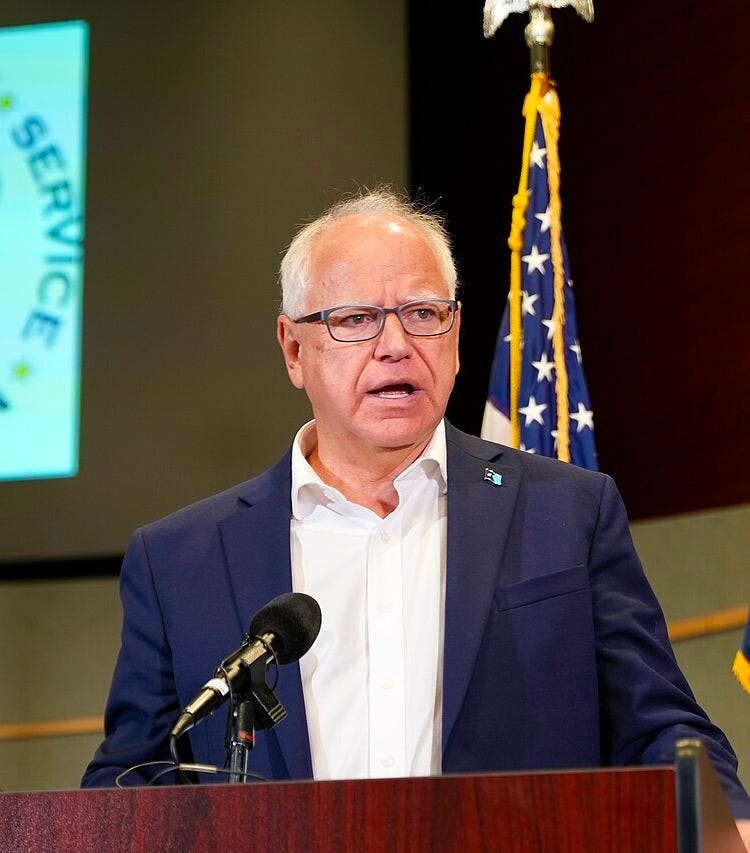
Some online commentators have mocked Gov. Tim Walz for calling Minnesota an “island of decency” and urging people to “protect each other.” Many on the left believe Walz and Minneapolis Mayor Jacob Frey should be doing more to confront the federal government, arguing that strong statements and aggressive tweets are not enough. Social media has been filled with videos demanding that Frey and Walz “grow a spine” and take action. Critics scoff at Frey’s refusal to support abolishing ICE. They voice their anger at the Hennepin County Sheriff for extinguishing the warming fires at the Whipple Building while doing nothing to stop federal agents.
At the same time, the prospect of MPD or the National Guard entering into direct armed conflict with federal agents terrifies many residents. Such a confrontation could prompt President Trump to invoke the Insurrection Act and place federal troops in our streets.
While some on the left argue city and state leaders haven’t gone far enough, the Department of Justice has announced investigations into Walz and Frey for potential violations of a conspiracy statute. The claim is that their public statements impeded immigration enforcement. Others fear that the conflict unfolding in Minnesota is being staged as a precursor to eliminating midterm elections.
It’s difficult to assess how likely that scenario is. What seems more plausible is a wave of investigations into Minnesota’s election systems, particularly mail-in voting and vouching. The groundwork is being laid to question the legitimacy of our elections. Trump has been eager to find a justification for removing Rep. Ilhan Omar from office.
Optics Are Everything to Trump
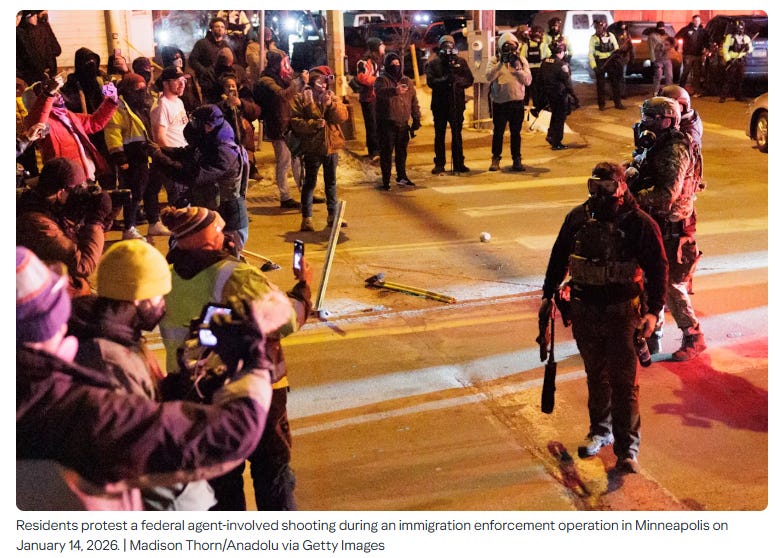
The number of “influencers” and “independent creators” who have descended on Minneapolis is striking. Some are genuinely documenting what they view as illegal actions by ICE agents. Others appear intent on provoking conflict to promote the narrative that observers and protesters are paid instigators.
ICE has allowed favored media outlets to participate in ride-alongs. When Jonathan Ross shot Renee Good, he was recording video. Trump has encouraged ICE to document more of their actions for social media distribution. What some view as abhorrent or illegal behavior is celebrated by others. Violent clashes and chaos are good for those who make a living from online engagement.
How these outlets label people, whether as observers, protesters, or paid instigators, often signals exactly who their audience is.
Christian Paz described the right-wing influencer ecosystem for Vox this way:
They filmed protests; rode along with Immigration and Customs Enforcement and Customs and Border Protection; documented—and at times seemingly instigated—confrontations with protesters; and worked a competing, ICE- and Trump-friendly narrative out of what was happening in Minneapolis. From the ground, they churned out content painting protesters as lawless, demonstrations as riots, and anti-ICE activists as extremists or criminals. Outside of the state, right-wing influencers and large social media accounts amplified these videos to reach much wider audiences.
Figures like Nick Sortor and Eric Daugherty have been particularly effective at pushing the ICE-aligned version of events into the broader public discourse. According to online engagement statistics, while left-leaning influencers initially dominated in the day and a half following Good’s shooting, right-wing accounts quickly narrowed the gap.
Paz notes that “left-leaning creators and critics are at a disadvantage online in competing with this flood of content.” If that assessment is correct, it helps explain why local media and creators struggle to reach a national audience. There simply isn’t comparable funding or infrastructure on the left to manufacture viral narratives at scale.
We highlight the role of right-wing influencers not to legitimize them, but to emphasize that the media frenzy unfolding here is part of a coordinated spin campaign. The administration is waging a public-relations war. Images of ransacked vehicles and stolen documents after the shooting of a Venezuelan man in the leg are highly desired fodder for that machine. The FBI is now offering a $100,000 reward for information leading to arrests.
Already, online speculation has surfaced alleging involvement by a trans activist. Whether true or not, that claim will circulate widely—and if it’s wrong, it will never be corrected with the same intensity. Disinformation takes on a life of its own. While many left-leaning creators strive for accuracy, many on the right do not feel bound by the same standards.
Winning the Long Game
As more time passes since the murder of George Floyd, public memory of what followed continues to shift. The term “riot” is now used far more comfortably than “uprising.” On Saturday, conservative influencer and January 6 rioter Jake Lang attempted to hold a “March Against Minnesota Fraud” downtown. He was forced into a City Hall window well after counter-protesters hit him with water balloons.
We haven’t yet seen how that moment is being framed online, but experience suggests the story will vary dramatically depending on who you follow and which outlets you consume.
We support resistance to ICE’s illegal tactics and deeply value the mutual aid neighbors have shown one another. The focus must remain on ICE’s actions and the violence they perpetrate. Winning the public-relations battle is part of that resistance. If public opinion begins to erode Trump’s approval rating, federal agents may withdraw from Minnesota.
Right now, national sentiment appears sympathetic to the anti-ICE narrative. That support is fragile. Once attention shifts from ICE’s conduct to disputes over who instigated confrontations between observers and agents, the narrative can change quickly.
When Walz says, “Don’t take the bait,” we believe he’s right. He’s warning against the temptation to unleash anger without considering the consequences. What’s happening in Minnesota could become more than a single moment of resistance—it could be the beginning of a movement. For that movement to be sustainable, anger must be harnessed and directed into actions that undermine, rather than reinforce, the administration’s preferred storyline.
Ten minutes of unfiltered rage can become ten minutes you regret for the rest of your life.
Hate is exhausting. It’s heavy, and the longer it’s carried, the more it weighs you down. Jake Lang came to Minneapolis fueled by hate, seeking attention, clicks, and validation. He succeeded in generating engagement. But the risk facing the resistance is believing in a “right” or justified hatred. Once actions are driven by hatred, they begin to look indistinguishable, especially when flattened into a one-minute social-media clip.
Many beautiful things are happening across our city. Neighbors are meeting for the first time through chat groups and volunteer efforts. Trust is being built. Those connections are durable and will serve Minneapolis long after this moment passes. They may not go viral, but they deny others the opportunity to weaponize our anger against us.
Some may react skeptically to the idea of considering optics while standing in the streets. But this is the reality of modern politics. It is not enough for actions to be just; they must also be perceived as just. Public perception ultimately determines the outcome of elections.


