


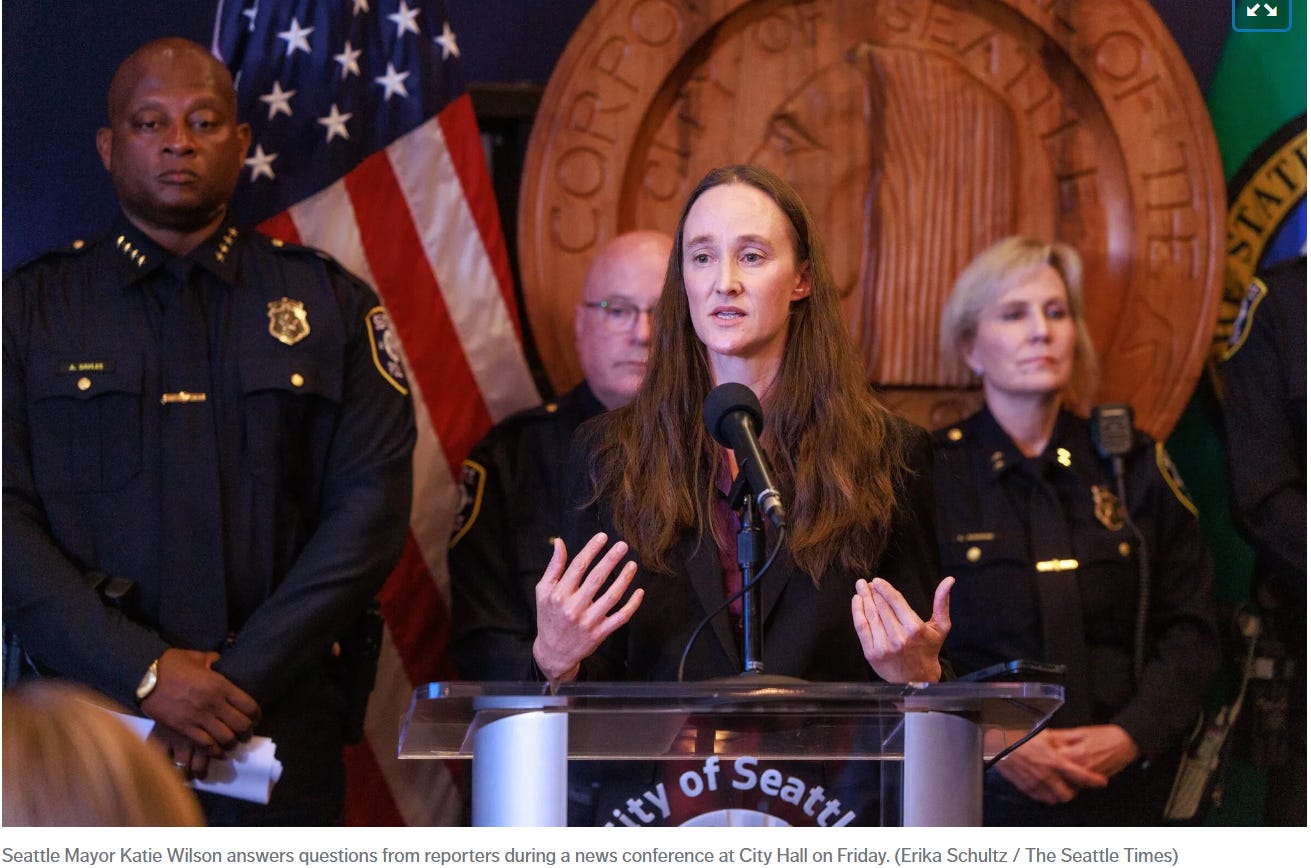
Seattle Mayor Katie Wilson is off to a rocky start. In April, at a panel discussion at Seattle University, she laughed and told wealthy residents leaving over taxes to go ahead and go. It was an odd moment for someone who protested Amazon as a union organizer in 2015 and is now, as mayor, trying to keep the company from moving more jobs out of the city. Then this week, several people were shot at a food festival, and Wilson left the public waiting for hours to learn what had happened. She seemed unprepared to communicate with residents and calm their fears. The police chief bore the brunt of it. He was asked to resign, with a $590,000 payout, after it came out that he was out of town during the shooting and spends a good deal of his time traveling between conferences and his family in Chicago.
During our recent trip out West, several elected officials told us they want to improve their cities’ reputations. They were frustrated that the media fixates on the negative. As people who consider ourselves loosely part of the media, we understand the impulse. “If it bleeds, it leads” is still very much how the news works, and it may be getting worse as more outlets compete for the same shrinking attention. But even if the media is biased toward violence and officials' mistakes, and even if that bias breeds distrust, government still isn't off the hook for giving the public accurate information. Politicians and PR firms go to great lengths to manage public opinion, and that effort is part of what feeds the distrust in the first place. Building a good reputation is harder in this environment, but no less important.
Across the river, St. Paul’s new mayor, Kaohly Her, is trying to explain away sexually explicit conduct and convince residents she should stay in office. Meanwhile, Minneapolis is now competing with Seattle for a new police chief, after Chief O’Hara’s resignation dealt a blow to both our reform efforts and our reputation as a well-run city. Mayor Her’s actions and Wilson’s do more than damage their own personal brands. They damage the cities they lead.
Minneapolis has its own version of this problem. The mass shootings that keep happening here, with unnerving regularity, leave an impression that reaches well beyond the metro area. They reinforce the story suburban residents already tell themselves about the city: one more reason to eat close to home or skip a show downtown. The city is working hard to promote its arts and music scene to draw people in, and each incident undercuts that work. To be fair, our officials have communicated far better than Mayor Wilson did in Seattle, though that may just be a sign of how much practice they’ve had.
The Similarities
Minneapolis, St. Paul, Seattle, Portland, and San Francisco are all blue cities trying to recover from Covid, social unrest, and an economy that no longer needs downtown offices full of workers. In that sense, their reputations are linked. When companies decide where to locate, they look for cities that are well run and welcoming, clean, safe, and equipped with good schools. Being a “progressive” city has to mean being a city with programs that actually work. If a mayor’s answer to drug use and homelessness is a research paper, that’s a failure. Research stops mattering to someone stepping over an unconscious body on the sidewalk or the train. Families weighing a move to Minneapolis might see our weak schools and expensive childcare and look elsewhere.
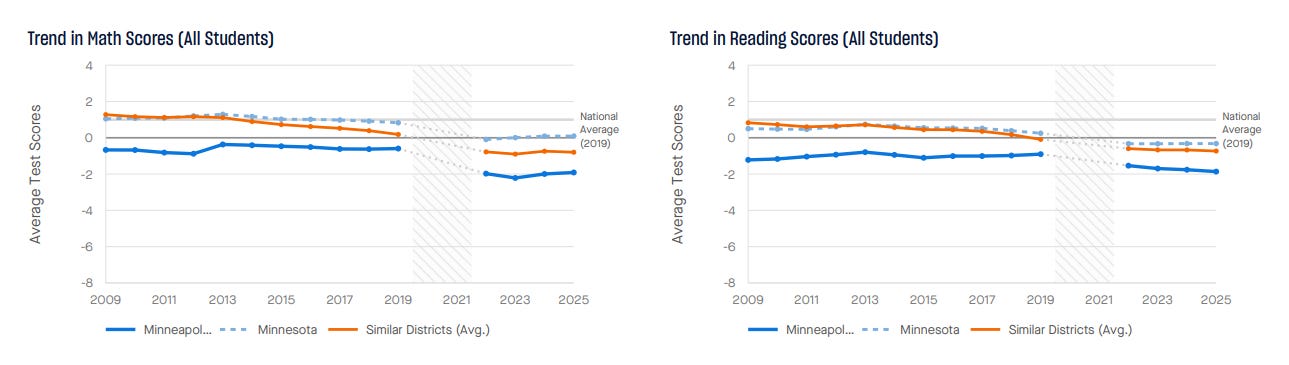
Minneapolis and its peer cities are competing for business against places like Dallas, Charlotte, and Nashville. To keep up, we need to work much harder at building a reputation as a city that is safe, effective, and open for business. We aren’t there yet. When you have to convince outsiders your city is safe despite the shootings and the encampments, you’re already digging out of a hole.
What do you think Minneapolis’s reputation is right now?
What do friends and family outside the state tell you?
What’s at Stake on August 11
Readers of this newsletter tend to be more politically engaged than most, and many understand that the August 11 primary will send a message about the kind of leadership Minnesota and Hennepin County want for the next four to six years. Some voters will want to send a signal that we remain a “progressive” state, and for many of these races, that has come to mean how loudly a candidate opposes Trump. Others will be more focused on finding capable leaders with the experience to do the job well and build a reputation for competence.
Danny Westneat wrote about what is occurring in a recent column about Seattle, and it applies just as much here:
“The establishment really has fubared a lot of stuff, so the impulse to sack them is understandable. But politics and governing remain unique, demanding skills. It’s not like running a business or an activist group, as we are seeing play out in real time. Boring question, then, after a tumultuous week: Is it too much to ask for stuff just to work?”
When it comes to the basics, like clean and safe streets, people want results. That doesn’t mean trading compassion for cruelty. It means voters want leaders who share their priorities and have the experience and judgment to actually deliver.


