

Brief Overview
As Uptown turns a corner after years of construction and disruption, community leaders and business owners say the neighborhood is showing real signs of life, with new transit, events, and openings drawing people back. But the roundtable made clear that lasting revival will depend on tackling public safety concerns and building stronger, locally driven systems to support businesses and public spaces.
ICE Out
Saturday, December 20, 2025. Thousands of people braved bitter cold and high winds to gather on East Lake Street, protesting “Operation Metro Surge,” a federal immigration enforcement effort that has sparked demonstrations across the city. Like the ongoing protests outside hotels where ICE employees are staying, the rally was intended as a public act of resistance to what many see as an aggressive and punitive deportation strategy.
Minnesota has become a particular target of the Trump administration, and that focus has landed squarely on Governor Tim Walz and Representative Ilhan Omar. Both have been outspoken critics of the President and of expanded immigration enforcement. Their opposition has, in turn, drawn national attention and retaliation from an administration eager to challenge Democratic-led states.
Adding fuel to the fire are high-profile fraud investigations that have shifted from local headlines to national talking points. Trump has repeatedly cited these cases as justification for increased federal scrutiny in Minnesota, folding them into a broader narrative about immigration and government failure. Critics argue that this framing deliberately conflates criminal investigations with entire communities—particularly Minnesota’s large Somali diaspora—in service of a political agenda that goes well beyond fraud enforcement.


It’s impossible to predict what will be happening in Minneapolis when we schedule an interview. Rules—and reactions to them—at the local, state, and national level seem to change almost daily. With the Uptown Roundtable, our goal was to focus attention on some of the positive things happening in the city during the holidays. One example: Bachman’s is donating 500 poinsettias to area businesses, senior centers, and other public spaces. If you’re interested in participating, you can reach out at info@uptownminneapolis.com.
Like many readers, we were disheartened by the recent press conference held by First Assistant U.S. Attorney Joe Thompson, where he described fraud in Minnesota as occurring on an “industrial scale.” There is clearly much work to be done to get the city and state back on track. Still, we believe it’s important to highlight the community members who—despite a seemingly constant stream of negative news—continue to show up, work hard, and push for solutions to difficult problems. Especially now, when many elected officials seem disconnected from the challenges facing local businesses and residents, it is the community itself that keeps Minneapolis moving forward.
Roundtable Summary
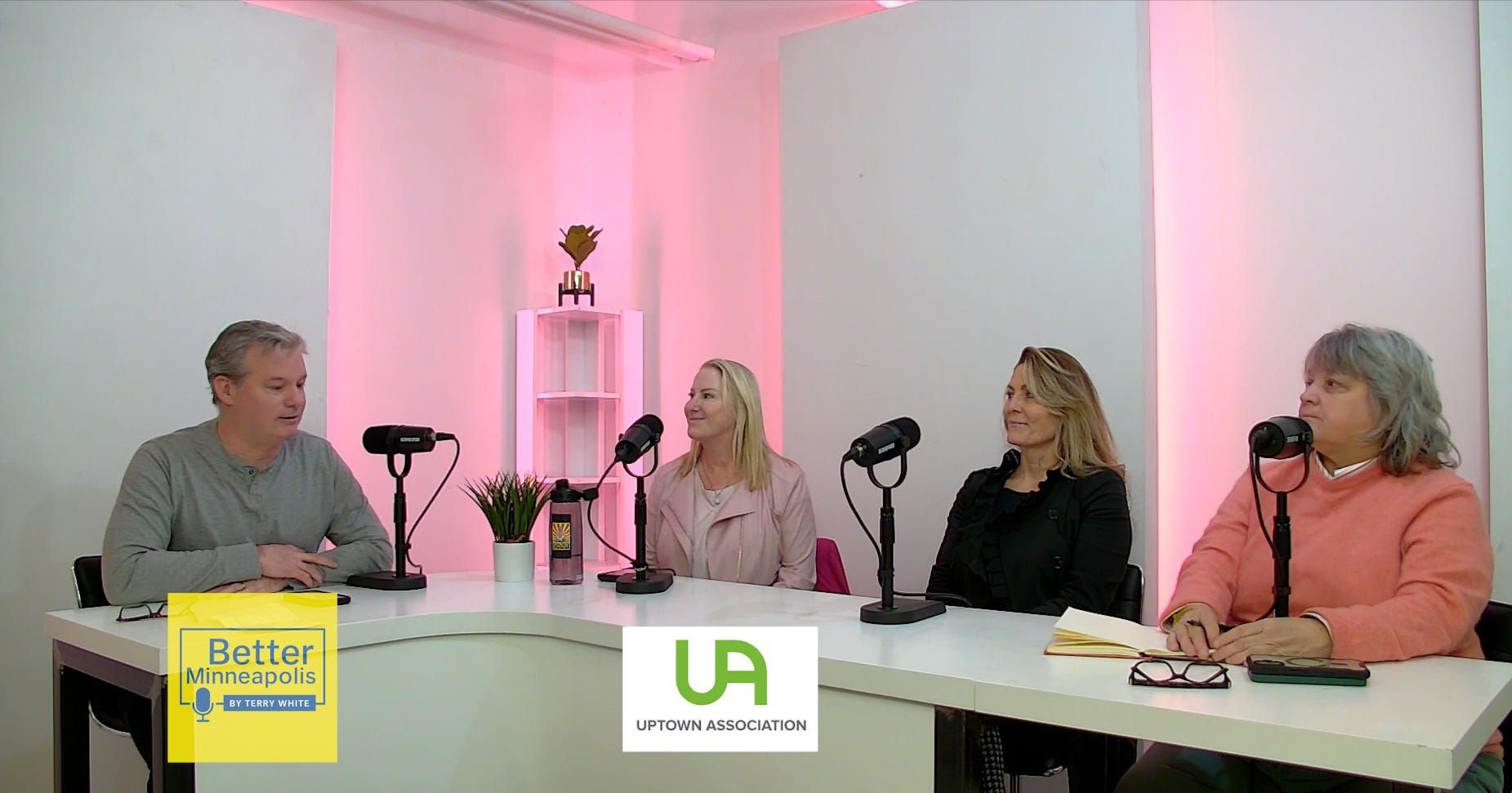
The roundtable discussion painted a picture of an Uptown that is actively rebuilding momentum after a long stretch of disruption. Participants highlighted the end of Hennepin Avenue construction and the launch of Metro Transit’s E Line as important turning points, making it easier for people to visit and re-engage with the area. They emphasized Uptown’s growing calendar of events, from live music and theater to holiday markets and storefront activations, as well as new and upcoming businesses like a jazz club, restaurants, and creative spaces that signal renewed confidence in the district.
At the same time, the conversation did not shy away from ongoing challenges. Panelists spoke candidly about public safety concerns tied to visible drug use, dealing, and disorder, and how those issues continue to discourage visitors and strain small businesses. This led to a discussion of a grassroots letter-writing campaign aimed at city leaders, encouraging residents and business owners to document their experiences and push for more focused attention and resources. The group stressed that consistent reporting, civic engagement, and collective advocacy are essential to changing conditions on the ground.
ADVERTISEMENT
For guidance preparing for your next big interview—whether for school, business, or any public-facing opportunity—visit pbrmedia.io to learn how we can help.
Looking ahead, much of the discussion centered on long-term structural solutions to help Uptown thrive. A major focus was the potential creation of a Business Improvement District (BID), which would allow businesses to pool resources for cleanliness, safety, marketing, and placemaking—giving the neighborhood more control over its shared public spaces. Carol pointed to successful examples in other cities and imagined how a BID could help curate retail, support events, and even create iconic attractions unique to Uptown. The overall tone was cautious but optimistic: Uptown’s revival is underway, but sustained progress will depend on organization, accountability, and continued community involvement.


