


The Polls
If the polls taken in Minnesota since January 2026 are to be believed, Representative Angie Craig is in a tough race to win the DFL primary for U.S. Senate on August 11. North Star Dawn PAC, arguably the poll most favorable to Craig, showed her with a one-point advantage over Flanagan in May. KSTP found Craig with a five-point advantage in June, but its follow-up survey in July showed the candidates even. The polls associated with Flanagan’s campaign put her up anywhere from 7 to 14 points.
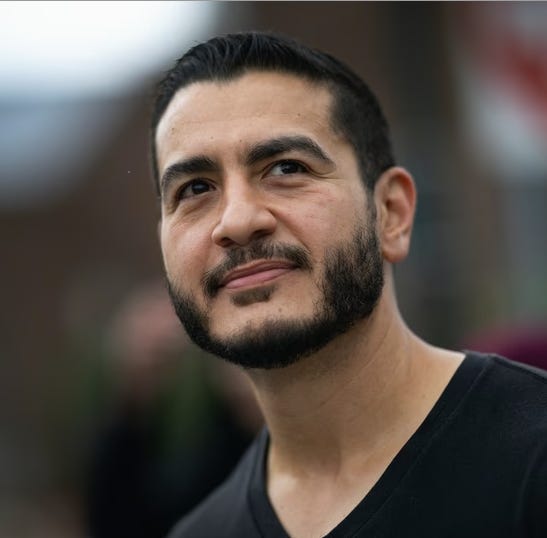
Polls can be deceiving. In Michigan, Abdul El-Sayed won his primary over Representative Haley Stevens by a much smaller margin than polls predicted. The question now is whether a similar dynamic plays out here, with a more left-leaning Flanagan, like El-Sayed, edging out the more centrist Craig.
What we find most troubling about this race, and to a lesser extent the Hennepin County Attorney’s race, is the level of animosity on display on social media. Whichever candidate you support, the opponent is cast as a complete poser, unworthy of respect or consideration. Our politics, even within the same party, have strayed far from the days when disagreement was possible around the edges of policy. Everything is treated as existential. No pressure, but if you listen to the breathless declarations online, our entire democracy is at stake in this battle of left-of-center versus more left-of-center.
According to the Cook Political Report, the Minnesota Senate seat remains “Likely D.” Whoever wins the primary is likely to become the state’s next U.S. Senator, one vote out of 100. If Democrats can’t flip a few seats elsewhere, that single vote won’t change much. Many observers believe El-Sayed is unlikely to win the general election in Michigan, which would all but assure Republican control of the Senate. Whether Craig or Flanagan represents Minnesota, their impact on the national scene will likely be far less significant than the rhetoric surrounding the race suggests. What does seem certain is that the DFL will remain split, and that the ugly interparty politics playing out in the state will continue.
Two-Front War
Jonathan Chait, writing in The Atlantic, describes the situation within the Democratic Party in his article “Liberals Are Now Fighting a Two-Front War.” According to Chait, El-Sayed’s victory is a serious setback for centrist Democrats, one they need to absorb quickly or risk becoming irrelevant within the party.
He frames the rise of the party’s left wing this way:
the greatest challenge for mainstream liberals is winning the substantive argument with the left. That’s inherently difficult, because within any political party, the more extreme faction can appeal to ideological purity without worrying about the opinions of voters outside the party. Democratic socialism, for instance, is unpopular with the American public as a whole, yet it draws approval from roughly three-quarters of Democrats. As a result, Democratic Party moderates who have good reason to oppose socialism have a hard time convincing partisans who show up to vote in primaries to feel the same way.
Chait draws a comparison to the internal disputes that helped propel Trump to the presidency within the Republican Party. His conclusion:
What left-wing insurgents such as El-Sayed and Piker want is to take over the Democratic Party, a goal that gets easier when traditional liberals flee it. Carville’s wing of the party is being out-strategized by an insurgent faction that has shrewdly exploited the weaknesses of the party’s leadership. The soundest course of action for mainstream liberals is to recognize how and why they have been losing, and learn how to fight smarter and harder.
We tend to agree with Chait’s conclusions. The Democratic Party’s internal battles are a real weakness, one with implications for its national prospects. If centrists on their heels can’t articulate a platform that pulls the party together, that bodes poorly for winning the Senate or the presidency in 2028.
Minnesota faces significant challenges of its own. We are working to rebuild our main economic engine, Minneapolis, and yet each election cycle seems to make it harder to align goals and direct resources where they’re needed. School and city budgets are strained. Our economy is showing signs of slowing. Right now, we need elected leaders who prioritize competent, steady leadership over personal ambition, with a mindset focused on solving our most complex problems. Keeping the DFL intact is only one item on that list.


