


Brief
As Minneapolis leaders debate whether to add eight public restrooms downtown, the Minnesota Star Tribune reports that the City Council is considering a $700,000 budget amendment to build them. It’s a welcome recognition of a real need; private businesses shouldn’t be expected to function as the city’s bathroom system, but the proposed amount is far from the full cost.
What Practical Governance Looks Like
Good governance means budgeting for the entire lifecycle of a project, not just the construction price tag. And when it comes to public restrooms, the experience of other cities offers a clear lesson: whatever number you start with, the actual costs will almost certainly be much higher. Practical governance requires that the worst-case scenario be used as the basis for your planning.
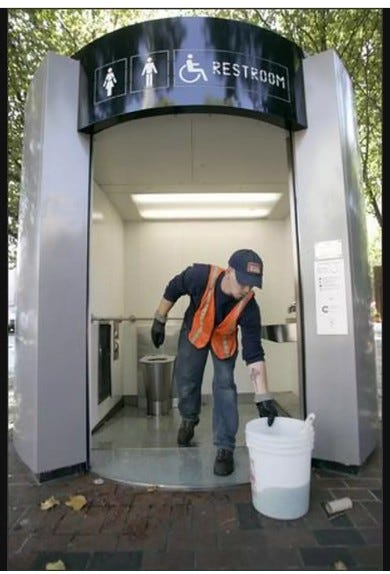
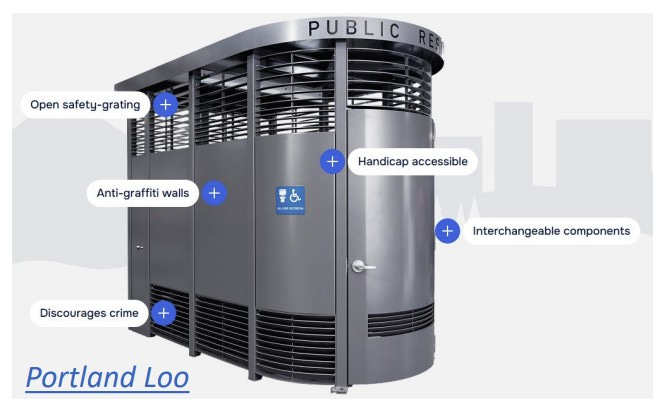
A practical approach starts with an uncomfortable truth. We would like to imagine that public restrooms can be largely self-policing, used as intended, and integrated smoothly into downtown life. But most cities that have tried this have encountered something very different. The $87,500-per-unit estimate currently on the table is already below the Legislative Research and Oversight analysis the city commissioned—and far below the real-world range of $300,000 to $500,000 once you factor in utility hookups, ADA compliance, and the “vandal-proof” materials needed to withstand heavy use. And that is before ongoing maintenance and security, the two cost drivers cities chronically underestimate.
If city leaders want a preview of what these restrooms will require, they need only talk to the managers of Starbucks, McDonald’s, and other businesses that have been acting as de facto public bathrooms for years. Their staff routinely find themselves monitoring restrooms, timing visits, and dealing with drug use, prostitution, and unsafe situations. We had a friend quit her job as a barista because she was tired of being asked to clean bathrooms and monitor users. Some Starbucks locations in high-traffic areas have even closed because they could no longer guarantee staff and customer safety, despite on-site security.
A trip to the public restrooms in the main city library is an example of what will be required. It’s not unusual to see clothes being washed or people staggering out of stalls. These facilities need constant cleaning and attention. Police and paramedics are frequent visitors.
Advertisement

Learn more here: pbrmedia.io
Department of Public Restrooms
Adding public restrooms downtown is not a one-time capital project—it’s a long-term operational commitment. If the city moves forward, it must be done correctly, or Minneapolis risks building eight facilities only to shutter them later, wasting millions in construction and ongoing costs.
The reality is that these restrooms will require 24/7 staffing. Even at the new January 1 minimum wage of $16.37 an hour, covering three shifts across eight locations means at least 24 employees. Add one or two supervisors to handle scheduling, staff support, and the inevitable sick-day coverage, and you’re looking at roughly 26 staff members. At that scale, the annual cost approaches $1.5 million. If we use the official pay scale of the city, in which a maintenance worker earns $26.14 per hour, that total would jump closer to $2 million.
And staffing isn’t a simple matter of unlocking doors and emptying trash. Employees will need training in Narcan administration, CPR, and de-escalation. They’ll need reliable communications equipment for calling police, fire, or EMS. These are calls that will, based on the experiences of Seattle, Portland, and even our own downtown library, happen regularly. A clear policy manual will be essential to guide staff through situations such as overdoses, fights, people occupying stalls for long periods, or other unsafe activity. Oversight will be required to ensure staff follow protocols and maintain professional boundaries.
In short, if the city adds eight public restrooms, it is effectively creating a small Department of Public Restrooms. It’s an operation with real staffing needs, real training requirements, and real risks. None of these challenges are disqualifying. But practical governance means planning for them from the start, not after the doors open.
Conclusion
Unfortunately, given the present realities, adding public restrooms downtown requires greater commitment than a $700,000 budget amendment. We want to believe we live in a city and state that can manage basic public services well. Yet our mental health system remains overstretched, and programs for housing and addiction recovery are chronically underfunded and too often undermined by fraud and waste. It’s a discouraging sign of broader shortcomings that something as simple as a public restroom has to be treated as a public-safety challenge.
These same shortcomings will doom any restroom initiative unless leaders commit to practical, transparent budgeting and clear policies from the beginning. Launching new programs with insufficient resources may generate short-term goodwill, but it ultimately produces poor performance and deepens public frustration with the government.
Anyone who has hurried through downtown looking for a restroom understands the need. Minneapolis can provide them, but only with thoughtful planning. That means budgeting for the full cost, assigning leadership accountable for results, and treating operations as seriously as construction. Simply inserting a budget amendment without addressing the true scope of the work is an avoidable failure waiting to happen.
To learn more about advertising opportunities with this newsletter, reach out to terry@betterminneapolis.com


