


The Revolution Will Be Live Streamed
Minneapolis became the epicenter of national attention this week after Renee Good was shot and killed by an ICE officer. The killing sparked immediate outrage, intensified by the federal government’s self-serving interpretation of what occurred and by the rapid arrival of media figures and online personalities from around the country. What began as a local tragedy quickly spiraled into a national spectacle.
Renee Good’s death on January 8 sent a shockwave outward. Her family and the bystanders who witnessed her killing felt the impact first, followed by friends, neighbors, and the broader community she was part of. From there, the grief spread across the city and beyond. It is far too soon to understand the full consequences of her killing. Right now, it feels as though we are watching a tsunami form on the horizon, aware of its power, but uncertain how devastating it will be when it finally reaches shore.
As the shock spread, Minneapolis was flooded with cameras and livestreams. We became aware of media outlets we had never heard of until they began broadcasting live scenes from the streets, interviewing protesters, offering legal analysis, and dissecting video footage in real time. Among them was Lindell TV, an online outlet launched by the Republican candidate for governor, which began as FrankSpeech.com in 2021 and rebranded in February 2025. The demand for raw footage of every confrontation, protest, and government action is enormous, and many are looking to profit from the tragic events unfolding here. In this environment, the line between journalism and content creation has blurred to the point where “news media” now often means anyone with a phone and a following.
Against this backdrop, Mayor Frey has asked media outlets to bring credentials to press conferences, a decision that reflects the confusion over who is reporting in good faith and who is simply chasing engagement. What constitutes legitimate media has become an open question, even as the city struggles to communicate clearly during a moment of crisis.
The sense of instability deepened when Governor Walz announced on television that he was activating the National Guard. Watching that announcement, we found ourselves wondering whether we were witnessing the beginning of a larger confrontation between blue states and the federal government. We have entered uncharted territory. The constant stream of content creators speculating loudly about what comes next is just that—speculation. No one truly knows where this leads.
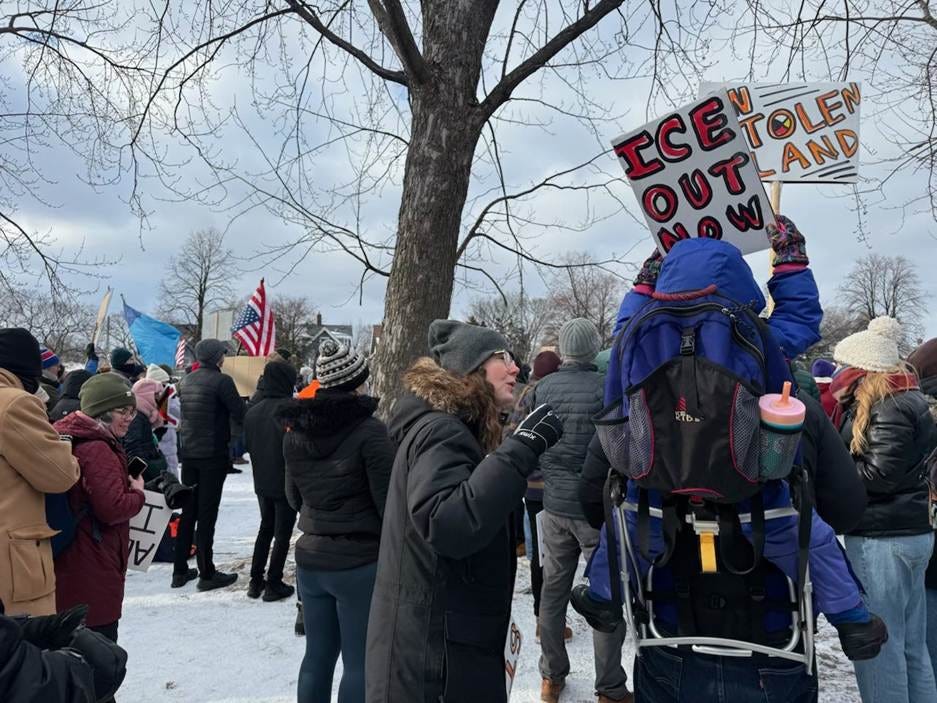
Saturday morning, helicopters circled overhead because thousands were gathered to protest in nearby Powderhorn Park. We don’t know whether the helicopters carry oppressors or protectors, and the uncertainty itself is unsettling. The collective trauma Minneapolis experienced after George Floyd’s murder has been reawakened. Each new image of police in riot gear, ICE agents tackling protesters, or clouds of pepper spray deepens the dread and raises the same unresolved question: how does a heavily armed conflict like this end? At the moment, few leaders are offering clear off-ramps toward calm and stability.
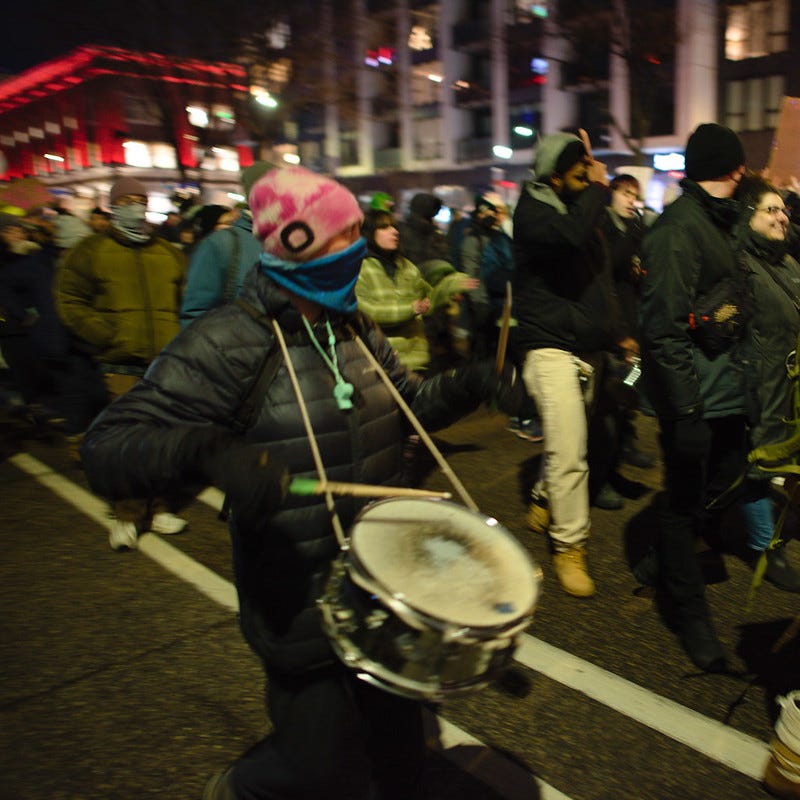
On January 10, the city reported that the Minneapolis Police Department, the Minnesota State Patrol, and the Minnesota Department of Natural Resources arrested 30 protesters during a downtown march for blocking roadways and damaging property. Officials urged people to protest peacefully. The list of what they cannot do includes throwing objects, blocking roadways, starting fires, damaging property, or using fireworks and weapons. Mayor Frey, who has emerged as a national spokesperson for the city through frequent podcast and television appearances, released a statement saying, “We are standing up to Donald Trump’s chaos not with our own brand of chaos, but with care and unity.”
Still, the use of the DNR for law enforcement does little to inspire confidence, particularly as the city and state face a far larger and heavily armed ICE presence. There are reportedly 2,000 ICE agents in Minneapolis, with more expected to arrive. Residents are unsettled by not knowing when ICE will leave, or under what conditions. Compounding that unease, the federal government has sidelined state authorities in the investigation into Good’s killing, raising serious doubts about whether justice will be served under the current administration.
On January 9, Hennepin County Attorney Mary Moriarty and Minnesota Attorney General Keith Ellison held a press conference announcing an independent review into the shooting. Candidate Francis Shen also released a statement, which we discussed in our interview with him. These developments raise difficult questions about the limits of state and local authority and how, if at all, they can resist federal power. They are questions about the functioning of the republic itself, and far beyond what we expected to grapple with as a local newsletter.
Our mood right now is one of sadness and trepidation. We mourn Renee Good and grieve with her family. We recognize the fear and vulnerability our immigrant neighbors are experiencing amid the ICE presence. We worry about the administration’s apparent willingness to press the country toward civil conflict. We are deeply concerned about the psychological toll this constant stream of violent imagery is taking on our community, especially on children, and about how difficult it is to explain these events to them.
We are also concerned that what is happening in Minneapolis will draw people from outside the city and state who see this moment as an opportunity to sow chaos and cause harm. To those choosing to protest or observe, we urge you to stay safe.
As always, you can contact us at: terry@betterminneapolis.com or on the Signal app at bttrmpls.33


